By Jason Keeley
The first question most people ask about a basement project is “what will it cost?” A better question is “what can I get for the money I have?” Here’s what three common budgets realistically buy, based on typical U.S. prices.
Around $10,000: Make it usable and bright
At this level you’re not building rooms. You’re turning a dark, unfinished space into one you’ll actually use.
- Fix moisture first. Extend downspouts, seal cracks and add a good dehumidifier. Nothing else matters if the space is damp.
- Paint everything. A light color on the walls, ceiling joists and ductwork makes a basement feel twice as bright. Spraying the open ceiling black or white is a popular industrial look.
- Upgrade the lighting. Replace bare bulbs with LED fixtures or wafer lights. Lighting does more for a basement than any other single change.
- Cover the floor. Epoxy, floor paint or interlocking rubber tiles all work for a gym, playroom or workshop.
- Define zones with furniture and rugs instead of walls.
This budget suits a home gym, kids’ play area, craft space or hangout room.
Around $30,000: A finished family room
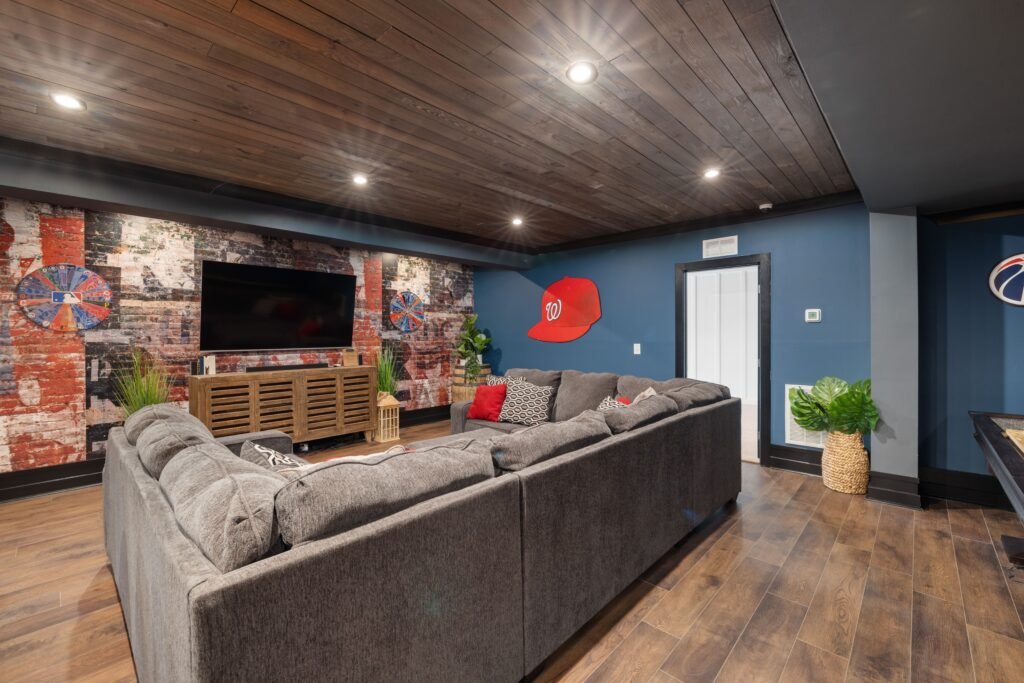
For roughly $30,000, many homeowners can finish a basic open space, often 600 to 800 square feet depending on local labor costs and how much you do yourself.
- Insulated, framed walls with drywall. Use rigid foam against the concrete to keep moisture away from the framing.
- A finished ceiling. Drywall looks best, while a drop ceiling keeps pipes and wiring accessible.
- Luxury vinyl plank flooring. It’s waterproof, warm underfoot and the go-to choice for basements.
- Recessed lighting on dimmers and plenty of outlets.
- One defined room, such as an office or media nook, framed off the main space.
Design tip: keep the layout open. Fewer walls means more light, lower cost and a space that feels larger.
Around $60,000: Guest suite with a bathroom
At $60,000 and up, you can add the features that boost home value and turn the basement into a second living area.
- A full or three-quarter bathroom. This is the biggest single upgrade, especially if plumbing has to be broken into the slab.
- A legal bedroom with an egress window. Required by code for any basement sleeping room.
- A wet bar or kitchenette with a sink, beverage fridge and cabinets.
- Built-ins, such as a media wall, bookshelves or under-stair storage.
- Upgraded finishes, including better doors, trim and tile.
This budget suits a guest suite, in-law space or a full entertainment level.
Getting the most from any budget
- Plan the layout around what’s already there. Moving the furnace, water heater or main drain is expensive.
- Do the finish work yourself. Painting, trim and flooring are where DIY saves the most with the least risk.
- Keep a 10 to 15% contingency. Basements always have surprises behind the walls.
Before you commit, put every line item on paper. A simple free basement budget spreadsheet helps you see where the money goes and where you can trim.
Jason Keeley is the founder of Basement Calculator, which he started in 2014 while finishing his own basement. He has been tackling DIY home renovation projects for more than 25 years.