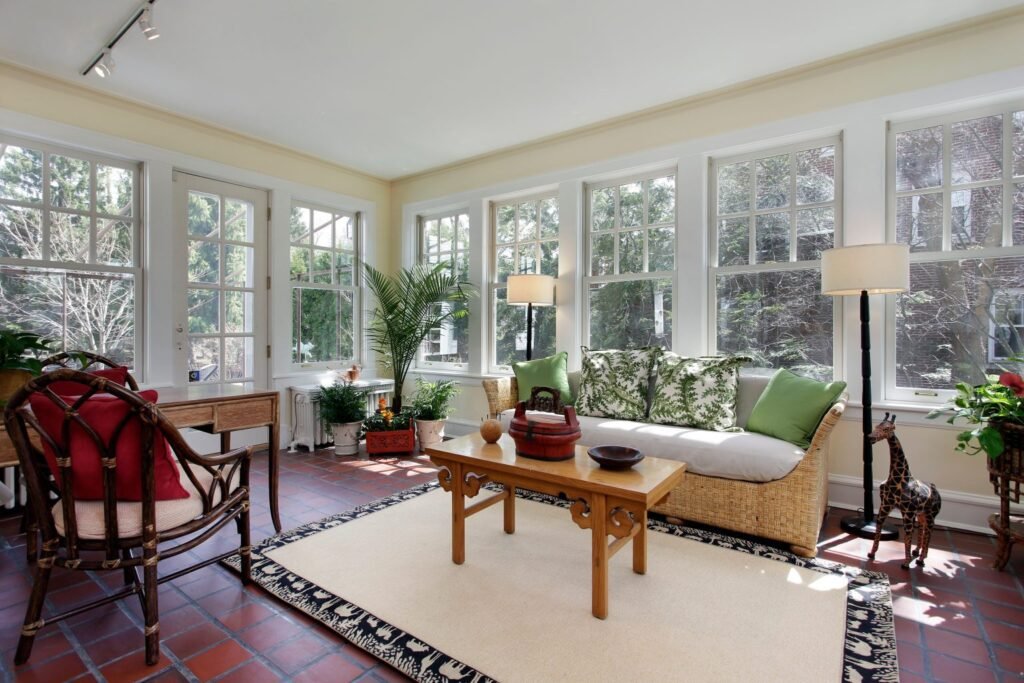
When most people picture a sunroom addition, they imagine a wicker chair, a small table, and a cup of coffee next to a window. That image is fine, but it barely scratches the surface of what these rooms actually become once families start living in them. A sunroom is one of the most flexible spaces you can add to a house, and the homeowners who get the most out of theirs are usually the ones who planned for a specific purpose from day one.
If you are thinking about adding one of these rooms, or you already have one and feel like it is underused, here are ten real-world ways families put their sunrooms to work.
1. A Home Office With Natural Light
Remote and hybrid work is not going anywhere, and a lot of people discovered during the past few years that working from a dark spare bedroom or a corner of the kitchen is miserable. A sunroom solves that problem. The daylight alone can change how a workday feels, and there is research suggesting natural light helps with focus and mood.
The practical details matter here. You will want electrical outlets for a desk setup, enough outlets for lamps and equipment, and window treatments that can cut glare on a screen during certain hours. A four-season room with proper insulation and climate control makes year-round work comfortable. Some homeowners also appreciate that a sunroom office feels slightly separate from the house, which helps with the mental switch between work mode and home mode.
2. A Home Gym or Yoga Studio
Gym memberships get skipped. Home equipment in the basement collects dust. But a bright room with a view of the yard? People actually use it. A sunroom works beautifully as a yoga or Pilates space because the whole point of those practices is calm, and morning light through glass delivers that in a way a garage gym never will.
For heavier equipment, flooring is the main consideration. Sunrooms traditionally had tile because of potential moisture, but modern building methods allow for a range of options, including rubber flooring over a solid subfloor. If you are planning a gym from the start, tell your contractor, because floor load and ventilation should be part of the design conversation.
3. An Indoor Garden Room
This is probably the most natural fit of all. Sunrooms started as a way to grow plants in protected conditions, and that original purpose still works. Citrus trees, ferns, orchids, herbs, and starter seedlings all thrive in the bright, humid environment a sunroom provides.
Gardeners love these rooms because they extend the growing season dramatically. You can start vegetables in late winter, overwinter tender plants that would never survive outside, and keep fresh herbs going through the coldest months. Just be honest about your climate. A three-season room will still dip toward outdoor temperatures in January, so plan your plants accordingly or invest in the insulation of a four-season build.
4. A Playroom That Keeps the Mess Contained
Parents of young children tend to describe their houses as being slowly consumed by toys. A sunroom gives all of that clutter a home of its own, and the light makes the room pleasant enough that kids genuinely want to spend time there.
Because sunrooms are often built with durable flooring, they handle spills and art projects better than a carpeted bedroom would. As kids get older, the room transitions easily into a hangout space for teens, which is a nice bonus. Very few other additions adapt that well as a family grows.
5. A Dining Room for Everyday and Entertaining
Some homeowners move their everyday table into the sunroom and never look back. Breakfast in a bright, plant-filled room just feels better than breakfast under a ceiling light. Others keep their formal dining room for holidays and use the sunroom as the everyday spot.
There is also the indoor-outdoor entertaining angle. A sunroom next to a patio or deck creates a natural flow during summer parties, giving guests a comfortable place to gather whether the weather cooperates or not. If entertaining is the goal, think about lighting for evening use and easy access to the kitchen for carrying food back and forth.
6. A Reading Room and Quiet Retreat
Yes, this is close to the classic sitting room idea, but there is a difference between a formal room nobody sits in and a retreat people actually escape to. The difference usually comes down to comfort and personality. A deep chair, a small bookshelf, a blanket, and a door you can close turn a sunroom into the quietest corner of the house.
For readers, one warning is worth repeating: direct sun damages books and fades upholstery over time. Window film or adjustable shades let you keep the light without sacrificing your furniture and collection.
7. An Art or Craft Studio
Artists, quilters, woodworkers with small projects, and hobbyists of every kind gravitate toward good light. Color matching is easier in daylight than under any bulb, and a sunroom gives you hours of it every day.
Crafters also appreciate having a dedicated space where a half-finished project can stay out without taking over the dining table. If this is your plan, consider ventilation for anything involving fumes or dust, plus plenty of outlets. A sink, if the layout allows it, is a luxury painters and fiber artists will never regret.
8. A Pet Room
This one surprises people until they try it. Dogs and cats naturally seek out warm, sunny spots, and a sunroom gives them a legitimate place to do it. Pet owners use these rooms for crates, litter areas, feeding stations, and a place where a muddy dog can dry off before running through the house.
Tile or luxury vinyl flooring makes cleanup simple, and the room gives pets a comfortable place to spend the day without full run of the house. For households with a new puppy or an anxious rescue, a bright, calm room can make crate training and decompression much easier.
9. A Music or Hobby Listening Room
Musicians need somewhere to practice, and a sunroom can work if you plan the acoustics. Glass is hard and reflective, so soft elements like rugs, curtains, and upholstered furniture are needed to keep the sound from bouncing around. Some families skip the instruments and simply use the room as a listening space, with a good speaker setup and comfortable seating for records or quiet evenings.
One caution: if the room will host regular music practice, talk to your builder about the wall construction. Sound traveling into the yard or back into the house is a common complaint that is much easier to address during design than after the build.
10. A Guest Room When You Need It
A well-built four-season sunroom can double as a guest room with a quality sleeper sofa or daybed. It is not the same as a dedicated bedroom, and you would not want to put guests there in the middle of a cold snap in a three-season build, but for most of the year it gives visitors privacy and a genuinely pleasant place to stay.
The trick is designing for flexibility from the start: a closet or storage bench for linens, blackout shades, and a door that closes. Then the room serves guests when they visit and works as everyday living space the rest of the year.
Choosing the Right Purpose for Your Room
Notice a pattern in all ten of these uses. The rooms that succeed were planned around a purpose, and the rooms that fail were built as generic “extra space” and then left for the family to figure out later. Before you commit to a design, ask yourself a few honest questions. How will you actually use this room on a random Tuesday in February? Does it need to be comfortable year-round, or mainly in three seasons? What are the electrical, flooring, and climate requirements of your top choice?
The answers change the build. A garden room and a home office have very different needs, and a good contractor will design differently for each. The glass package, insulation, ventilation, and electrical plan should all follow from the purpose, not the other way around.
It is also worth visiting showrooms or asking to see completed projects in your area. Photos are helpful, but standing in a finished room tells you quickly whether the proportions, light, and feel are right for what you have in mind.
The Bottom Line
A sunroom is one of the rare home additions that can be almost anything you want it to be, and it can change roles as your life does. The office becomes a nursery corner. The playroom becomes a teen lounge. The garden room becomes a reading retreat. That flexibility is exactly why these rooms hold their appeal long after other trends come and go.
Plan for a purpose, build for your climate, and give the room a real job to do. The wicker chair and coffee table can still be there. They just do not have to be the whole story.