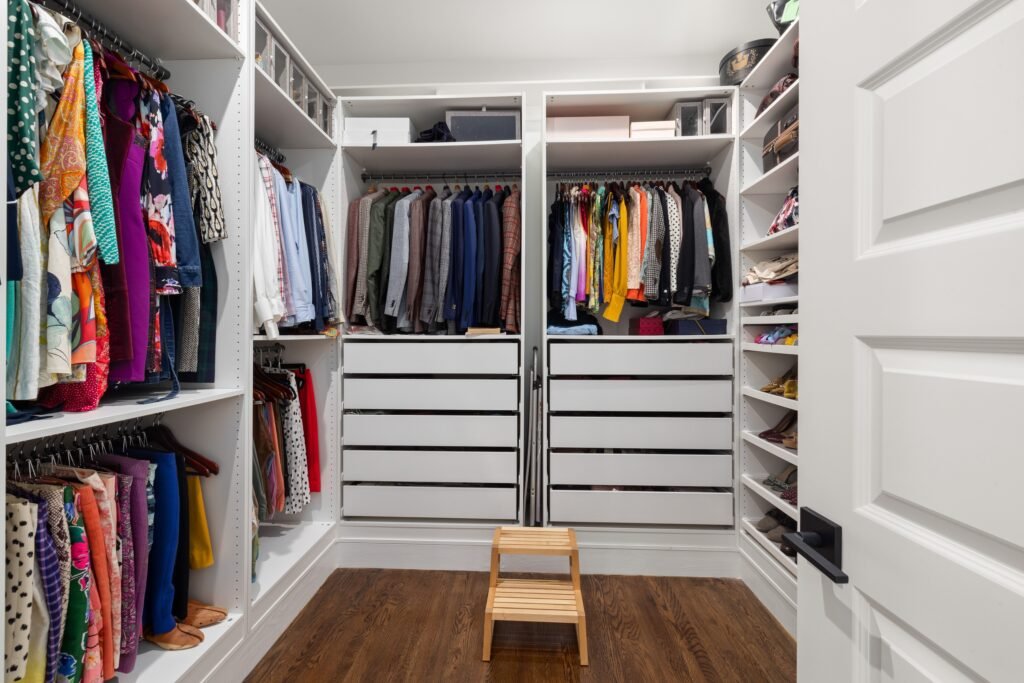
The kitchen island gets the budget. The primary bath gets the stone. The closet gets a rod and a few shelves. Three months later, laundry piles on the closet island. Nobody can find a belt.
You walk into that room twice a day. Usually before coffee.
Why do closets get skipped?
Closets don’t get a kitchen’s attention. By the time anyone turns to them, the owners are tired. They’ve made a long list of decisions. So the default package goes in. It looks great on move-in day. Week three is the problem. That’s when the real clothes show up.
Why does a bigger closet get messier?
More square footage gives clutter more room. A walk-in with no rule for what lives where becomes a holding room. You know the chair.
Older homes can be harder. Think original closets in Lakewood Tudors. Many were built for a different way of living.
We’re a team that organizes closets across Dallas-Fort Worth. Sorting comes first. Storage comes second. The sort tells you what the storage must hold.
How do you sort a closet?
Take everything out. Pile it on the bed. Yes, all of it. Then make five piles. Keep. Donate. Sell. Another room. Toss.
A sweater with the tags still on? Ask about that one first. Zero judgment. Everybody has that sweater.
Get the donation bags out the same day. Then size the shelving for what’s left. Build for the wardrobe you wish you owned and you’ve built a very nice home for clutter.
How do you decide what stays?
Ask three questions. Do you wear it? Does it fit today? Would you buy it again? One no makes it a maybe. Two noes make it a goodbye.
Give the maybes a deadline. Put them in a bag. Date the bag. Tuck it away. Open it in three months. If you didn’t reach for anything, pass it along. Zero judgment either way.
Where should things live?
Think about your hand first. The hanger comes second. Daily wear goes at eye level. Weekly pieces sit a little higher or lower. Formal pieces and suitcases go up top. Seasonal items get a labeled bin. Shoes, belts, watches and bags each get a spot. Nothing should have to move so you can reach something else.
Try this test. Could a houseguest find a black belt in thirty seconds? If not, the zones aren’t done.
Should you hang it or fold it?
Hang what wrinkles. Shirts. Dresses. Trousers. Suit jackets. Fold what stretches. Knits and heavy sweaters belong on a shelf. A hanger leaves bumps in the shoulders.
T-shirts work either way. Fold them into drawers, or hang them if you have rail space. Pick one hanger style and stay with it. A matching rail keeps the eye calm.
What goes in the drawers?
Small things. Socks. Underwear. Belts. Scarves. Swim gear. Give each its own section. Use dividers. A drawer with no dividers is a pile with a handle.
Fold clothes into small rectangles and stand them up. You see every piece at a glance. Nothing hides at the bottom.
How do you store shoes and bags?
Shoes need a visible spot. A shelf shows the pair. A box hides it. If you use boxes, label the end. Put the daily pairs at hand height. Put the formal pairs up top.
Bags like to stand. Stuff them so they hold their shape. Keep the daily ones where you can grab them. Keep the rare ones higher.
Where do watches and jewelry go?
A shallow drawer with a soft liner works well. Everything stays visible. Nothing tangles. Sunglasses fit in the same drawer. A small tray holds the daily few. Put it where you get dressed.
What if your closet is small?
Everything above still applies. A small closet just needs a stricter edit. Use the back of the door. Hooks hold robes and bags. Slim hangers save inches on the rail. Keep the top shelf for things you rarely touch. Every inch counts, so every piece has to earn its spot. A small closet that works beats a big one that doesn’t.
How do you keep it working all year?
Many closets stay set up for one season. Heavy coats crowd the rail in July. Sandals hide behind boots in April. Twice a year, swap. Off-season pieces go up top or into a bin. This season’s clothes come down to eye level. It’s also the easiest time to pass along anything you didn’t touch.
Add a quick weekly reset. Ten minutes does it. Rehang what’s on the chair. Return stray shoes. Take the laundry out. Ten minutes beats a lost Saturday.
What makes a closet feel considered?
Start with the light. Flip the switch. Is the back wall in shadow? That’s where the dark clothes hang. Fix that first. Light the rail and the ceiling.
Then swap mismatched hangers for a matching set. It calms a whole wall. Add deep drawers for folded knits. Add a flat spot to lay out an outfit. Put a mirror where the light is good. Label any bin you can’t see into.
Next to the cost of the build, these changes can be modest. They’re also what makes 6:30 in the morning feel calmer.
How do two people share one closet?
A split down the middle often leaves one person short on space. Give each person the room they need. That’s rarely half. Luggage and the safe go somewhere neutral. Add a one-in, one-out rule. Neither side creeps.
When should you call a professional organizer?
Sometimes a closet is beautifully built and still doesn’t work. That’s usually the system. A professional home organizer sorts what’s there. Sets the zones. Labels everything. That makes it easier to keep up.
Start with the sort. The shelving can follow whatever you decide to keep.