Meta description: Spray foam vs fiberglass insulation in snowy climates: why R-value per inch is only half the story and why air sealing comes first for ice dams.
When I crawl into an attic in January here in Eau Claire, the first things I check are dark smudges on the insulation, frost on nail tips, and gaps around light fixtures and pipes. Those clues show me where warm air is escaping. So when homeowners ask me about spray foam vs fiberglass insulation, I start with R-value and then move quickly to air.
The Chippewa Valley is a tough test. According to the UW-Madison State Climatology Office’s 1991 to 2020 normals for the Eau Claire airport, we average 55.4 inches of snow a year, January highs of 23.4 F and lows of 5.8 F, and about 7,923 heating degree days. The record low is minus 45 F, set January 30, 1951. The lessons from attics here apply to most snowy places.
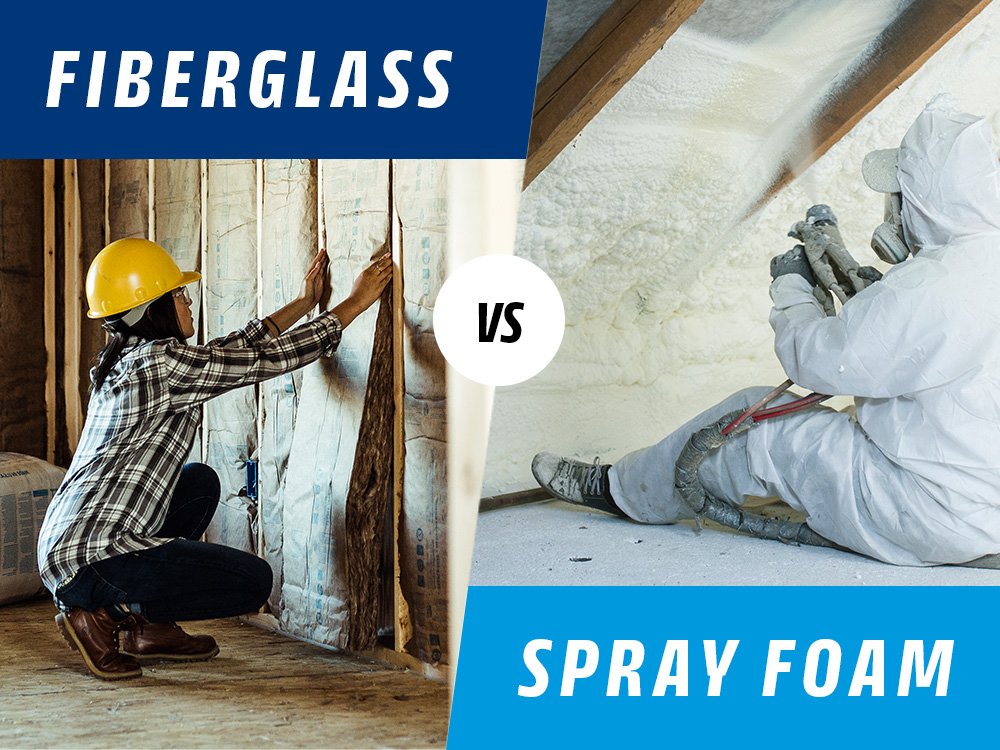
Spray Foam R-Value vs Fiberglass, Inch for Inch
The US Department of Energy uses rough estimating figures: fiberglass batts at about R-3.2 per inch, blown (loose-fill) fiberglass at about R-2.5 per inch, and sprayed foam at roughly R-5 per inch. Manufacturers list open-cell spray foam around R-3.5 to R-3.8 per inch and closed-cell around R-6 to R-7 per inch.
On paper, closed-cell foam wins the spray foam R-value vs fiberglass matchup easily. On an open attic floor, though, depth is usually available. You can keep adding fiberglass until you reach the target. R-value per inch matters most where space is tight: rim joists, cathedral ceilings and walls.
Every one of those numbers comes with a catch. Lab R-values are measured with no air moving through the material.
Why Air Changes the Comparison
Fiberglass is air-permeable. The building code itself sorts insulation into “air-permeable” and “air-impermeable” types, and fiberglass sits in the first group. It slows heat moving by conduction, but air can still drift through it and carry heat along. Those dark smudges I look for are often spots where air has been filtering through the fibers.
Spray foam belongs in the second group. It fills cracks and gaps as it insulates. The Department of Energy’s Building America program says spray foam provides excellent air sealing and can provide air barrier continuity at difficult details like rim joists. The same program notes it must be mixed at the proper chemistry to perform as intended, which is one reason the installer matters so much.
Moisture is part of the picture too. Manufacturers say closed-cell foam acts as a vapor retarder at roughly 1.5 to 2 inches thick, while open-cell lets much more vapor through. In a heating climate, that difference affects where each type belongs.
ENERGY STAR estimates homeowners can save an average of 15% on heating and cooling costs by air sealing and adding insulation in attics, floors over crawl spaces and accessible basement rim joists. Notice the order: sealing comes first.
Ice Dams Start With Warm Air
Ice dams form when heat melts snow on the upper roof and the water refreezes at the colder eaves. Many people blame thin insulation. The research points to leaks.
The Minnesota Department of Commerce says the primary cause of ice dams is attic air leaks. It says spray foam or caulking can seal the leak, that insulation alone is insufficient, and that adding roof vents, including powered vents, will not eliminate ice dams and often makes problems worse. University of Minnesota Extension says that in many homes, air leakage is the major mode of heat transfer leading to ice dams, and advises making the ceiling airtight first, then considering more insulation.
The Department of Energy’s ice dam guidance lists three steps: fully air seal the ceiling plane, thoroughly insulate the attic, and ventilate the roof. It calls sealing air leaks from the living space into the attic the most important step. It also notes that closed-cell spray foam can go on the underside of the roof deck in an unvented attic, a different approach that brings the attic inside the insulated shell.
Spray Foam vs Fiberglass Insulation: Cost and Trade-Offs
Spray foam usually costs more up front. Angi’s published price guide lists installed spray foam at about $0.60 to $1.60 per board foot for open-cell and $1.30 to $3.10 for closed-cell. A board foot is one square foot, one inch thick, so thicker foam costs more. HomeGuide lists blown-in fiberglass at around $1.00 to $2.80 per square foot. When you compare spray foam insulation cost vs fiberglass, think about the thickness you need and where it is going.
Fiberglass has real strengths. It is cheaper, it is easy to add on top of what is already there, and it works well when the attic floor has been air sealed first. For many vented attics, careful sealing plus a deep layer of blown fiberglass is a sensible, economical job.
Here are the spray foam pros and cons in short. Foam seals and insulates in one step, has a higher R-value per inch, and closed-cell slows vapor. It also costs more and needs a trained installer. The EPA advises occupants to leave during installation and stay out until the manufacturer’s re-occupancy time has passed. Some manufacturers recommend 24 hours for professional systems. Anyone comparing options for spray foam insulation in Eau Claire or elsewhere should expect the installer to explain those timing rules clearly.
Choosing the Best Insulation for Cold Climates
The best insulation for cold climates depends on the spot in the house, and the order of work matters just as much. ENERGY STAR says a good insulation contractor starts by sealing air leaks, then adds insulation to the recommended level.
Northern Wisconsin falls in climate zones 6 and 7. There, ENERGY STAR recommends R-60 for an uninsulated attic, or adding R-49 where 3 to 4 inches already exists.
I lean on foam for rim joists, tight spaces, cathedral ceilings and unvented roof assemblies. Fiberglass makes good sense on open attic floors once the hidden leaks around fixtures, chases, plumbing stacks and wall tops are sealed, often with foam or caulk.
Wisconsin’s Focus on Energy offers rebates for air sealing and attic insulation. Amounts change, so check current offers before you plan a project.
Quick FAQ
Is spray foam vs fiberglass an either-or choice?
Often, no. Many cold-climate attics end up with both: foam or caulk to seal the leaks, then fiberglass piled deep on top. Closed-cell foam takes over where depth is limited or the roof deck itself is being insulated.
Will more insulation alone stop my ice dams?
Usually not. The Minnesota and federal sources above agree that the leaks have to be sealed first. Insulation then slows the heat that remains, and the two steps together protect the roof edge.
Image suggestion (free Pexels license, credit optional): Icicles hanging from a snowy roof edge, placed near “Ice Dams Start With Warm Air”. Direct JPG: https://images.pexels.com/photos/15411336/pexels-photo-15411336.jpeg