When I look at a flaking driveway in March, I can usually tell its story before I kneel down. Spalling concrete, the patchy peeling that leaves a slab pitted and rough, is mostly decided on the day it’s poured and during its first winter. After that, the homeowner’s job is protection: go easy on deicers, skip the wrong ones, keep water off the surface, and seal it with a breathable penetrating sealer.
Why Concrete Spalling Hits Evanston So Hard
Evanston’s adopted residential code (the 2021 IRC) rates our weathering risk as “Severe” and sets the frost line at 42 inches.
The trouble is the back and forth. Chicago winter highs hover just above freezing while lows drop below it, so a slab here freezes and thaws over and over instead of freezing once and staying frozen. Lake Michigan moderates our temperatures but boosts snowfall, and O’Hare’s normal is 38.4 inches a year. Then come the wild swings. On January 30, 2019, during the polar vortex, O’Hare hit 23 below zero. By February 2 it was 41 degrees, a jump of about 64 degrees in three days.
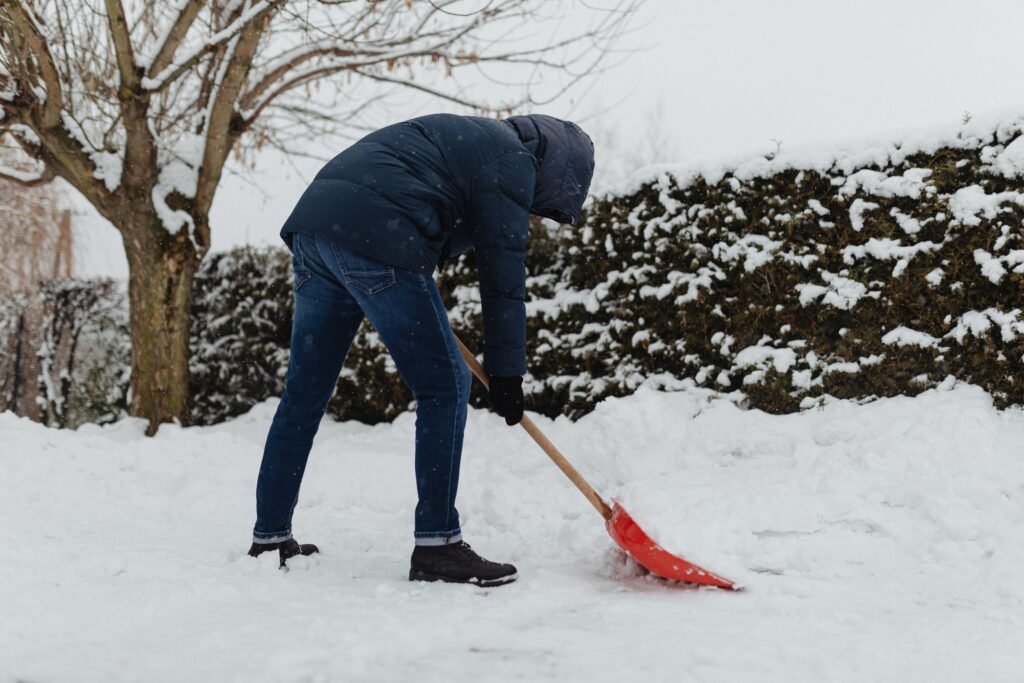
Then there’s salt. Evanston starts each winter with about 3,500 tons of road salt on hand, and the city requires owners and occupants to clear the sidewalk next to their property within 24 hours after snow or ice stops accumulating, with a path at least 36 inches wide. The ordinance even mentions sand, salt or other deicers as “best efforts.”
What’s under the slab varies too. Ridge Avenue follows Lake Michigan’s ancient shoreline, with sandy soil along the ridge and heavier clay farther west. That changes drainage block to block, and with it how long water sits on your concrete.
What Causes Spalling Concrete?

What homeowners call spalling, the industry usually calls concrete scaling: local flaking of the finished surface from freezing and thawing. It starts as small patches that can merge. Light scaling doesn’t expose the coarse aggregate. Moderate scaling exposes it and can strip 1/8 to 3/8 inch of surface mortar. In severe scaling, the stones clearly stand out.
The National Ready Mixed Concrete Association’s guide to scaling concrete surfaces traces most of it to a few causes:
- Too little air. Severe exposures call for 6 to 7 percent entrained air.
- Finishing with bleed water on the surface, which leaves a weak top layer, or overworking it, which knocks the air out of that layer.
- Insufficient curing. A curing compound or wet burlap does the job.
- Excessive chloride deicers on concrete short on strength, air or curing. About 4000 psi is the target where deicers will be used.
Before a replacement pour, it’s worth asking any concrete contractor in Evanston whether the mix is air-entrained and how the finisher handles bleed water. Hiring on price alone without asking is a mistake I see constantly.
Does Salt Damage Concrete? Which Ice Melt Is Safe for Concrete?
Salt can, especially early. A new driveway or walk should get no calcium or sodium chloride its first year. Use clean sand for traction, and when conditions allow, hose off the salt cars drip onto new driveways and garage slabs. After that, use salt sparingly.
I won’t call any bag “safe,” because sources disagree on calcium chloride. My approach: no deicer in year one, then a light hand with plain rock salt or sand. Never use ammonium sulfate or ammonium nitrate, and skip magnesium-based deicers (magnesium chloride, acetate or nitrate), which have been found to damage concrete. Read the label instead of grabbing the cheapest bag.
Fertilizer counts too. Products containing those ammonium compounds can cause scaling and chemical attack, so sweep stray pellets off the driveway after spreading.
There’s a bigger reason to go easy. Chloride in Lake Michigan has climbed from about 1 to 2 mg/L in the 1800s to more than 15 mg/L by 2020. Evanston is a recognized Salt Smart Community and takes part in the Chicago Area Waterways Chloride Workgroup.
Keeping Water Off and Sealing a Concrete Driveway
Poor drainage that lets salty water stand on the surface greatly increases damage. The classic spot is the driveway edge where plowed snow gets piled, melting and refreezing on the slab for weeks. Push snow onto the lawn when you can.
When sealing a concrete driveway, use a breathable silane or siloxane penetrating sealer made for concrete, and follow the manufacturer’s directions on frequency. Late summer is ideal, on reasonably dry concrete. Silanes often last 7 to 10+ years and siloxanes typically 5 to 7, though salted driveways wear them out faster. Avoid shiny, film-forming sealers that trap moisture. And a driveway that gets salted every winter really shouldn’t go unsealed.
Quick Answers
Can spalling concrete be repaired?
When people ask me how to fix spalling concrete, I’m honest. Sealing slows further damage but doesn’t restore lost surface. Light scaling is mostly cosmetic. When aggregate is widely exposed and the surface keeps coming apart, replacing that slab or section is usually the real fix.
Is concrete flaking the same thing as spalling?
For most homeowners, yes. Flaking, scaling and spalling all get used for this same freeze and thaw surface damage.