Have you ever asked yourself whether it is worth building a basement, or what it is likely to cost you? You’re not alone. This is the question that many homeowners have to address when they are going to plan their new construction or addition to the house. The short answer? Depending on the size, design, materials and the location that you live in, building a basement can be between $30,000 to $120,000. But here is the thing, what which you receive in return, many times compensates for the cost. A properly constructed basement can give you a higher valuation of your property, extra living area and even reduce the energy costs in the long term.
Let us deconstruct it so that you know what you are actually paying, and why.
What Is the Purpose of Building a Basement in the First Place?
Purpose Before plunging into dollars, let us speak of purpose. A basement is not an additional space. It can be the basis of coziness and chance at your home. You can use your basement to have a home gym, a rental property, a game room, or simply add some more storage space, which most above-ground extensions cannot offer.
And the punch line here is that most homeowners testify that completing a basement provides them with up to 70 percent returns of the money invested on selling their homes. Not bad considering that it is also improving the daily standard of living.
The Stripped-Down Basics of How You Spend the Money
Just how expensive is it to construct a basement? It has no single answer, it is a combination of material, labor, excavation, waterproofing and finishing decisions. And what causes the price to soar, or what causes the price to fall?
1. Excavation and Foundation Work
The trenching will normally cost around $50 to 100 per cubic yard. In case of rocky or uneven land, a few more money may be charged. Excavation involves excavating, grading, and removing soil, generally all preparatory work to have the ground ready to safely contain your new foundation.
When your builder is using residential estimating services you will obtain a more accurate projection of the cost of the ground prep prior to commencement of work. That will be a wise step to prevent unexpected costs in the future.
2. Materials and Construction
The next phase involves finalizing materials such as concrete, steel reinforcements, waterproof membranes, and insulation. Depending on quality and location, the structural shell of a basement can cost anywhere from $70 to $150 per square foot. This is where construction estimation services become essential; they evaluate every cost element and ensure that your material budget. With their detailed insights, you can make informed decisions and maintain full control over construction expenses.
3. Waterproofing
This part can’t be ignored. Waterproofing helps to keep your investment dry with no leaks, mold as well as structural damage. It usually costs 3,000-10,000, and going without it may result in the repair cost being very high in the future. Good contractors employ the use of both internal and external waterproofing, think sump pumps, vapor barriers and perimeter drains.
4. Electrical and Plumbing and HVAC
Need a place to live down there? Include an extra amount of between $20 and $50 per square foot in wiring, outlets, light, plumbing and ventilation systems. These are some of the necessities that will make your basement more of an extension of your home and not a cave in the ground.
5. Finishing Touches
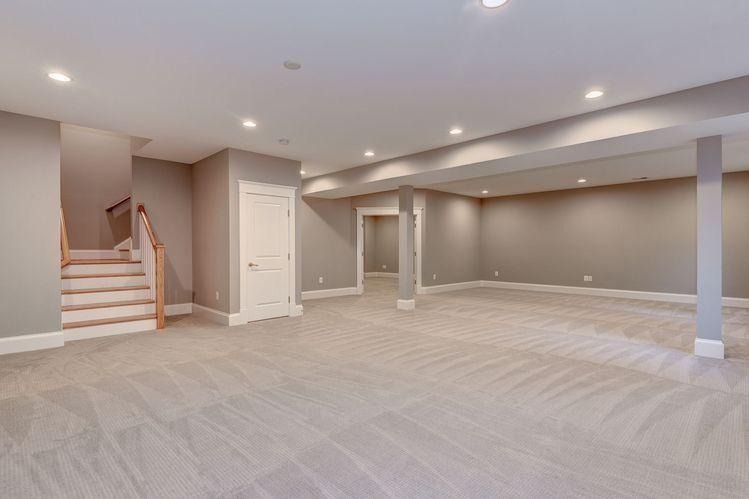
Flooring, walls, ceilings, paint and fixtures make a cold concrete shell a comfortable place to live. It only ever takes an extra 25 to 90 a square foot to complete depending on what you want to be built. Finishing the home with luxuries, such as a mini bar or bathing room/ entertainment area will soon increase the overall bill, but it will also increase the sale value and comfort of your home.
The Most Important Factors Which Influence Overall Basement Cost
Even in these limits, your ultimate price tag is subject to a number of large variables:
- Location: It is more likely that building costs will be higher in locations with urban areas or cold climates, as there are higher material costs and frost-protection requirements.
- Size: of course, bigger basements are more expensive, but this is compensated by higher returns on investment.
- Complexity of design: Adding rooms, custom lights or built-in furniture adds to the cost.
- Access: The equipment is not readily accessible, thus excavation or delivery can be more difficult and expensive.
- Type and moisture of soil: Clay-heavy soil is wet and increases the costs of waterproofing and drainage.
Sneaky Expenses You Never Reckoned On
It is a matter of fact, there are surprises in construction. Some of the hidden costs that owners of houses forget to consider are:
- Permit fees: This can vary based on the location between $500 and 3000.
- Engineering report: Add $1,000 to 2,000 in case the question of soil stability is doubtful.
- Repairing foundation (when doing to an existing home): Could be between 5000 and 15000.
- Insurance: Do not forget to renew your home insurance to cover the new building.
When planning a large construction project, it’s a wise decision to hire experts specializing in commercial estimatings, as they ensure accurate cost forecasting, prevent expensive mistakes, and help you maintain full control over your project budget.
How To Save Without Skimping
This is the good news, that it is possible to cut expenditure without cutting corners.
- Construction in dry seasons: Less water entails fewer delays and excavations.
- Install pre-cast concrete panels: It is usually more affordable and does not take as much time as poured concrete.
- Wait till later: Construct the building now, complete the interior work when you are financially able to.
- Combative work: By engaging one contractor to excavate, lay foundations, and waterproof, you are likely to receive three to four discounts.
- Be smart: Use estimation services as early as possible before this causes expensive changes during the project.
The Time of Building a Basement
Excavation to completion of a typical basement may require 6 to 12 weeks according to size, weather and complexity. A complete inhabitable cellar with rooms and amenities could extend to 16 weeks.
The schedule is also pegged on the approval of the permit and availability of material and thus planning early is really big.
Conclusion
In most cases, absolutely. A basement will be an addition that offers permanency, more space and utility to your home. Although a basement may seem an expensive investment at the time of construction, comfort, resale value, and energy efficiency make it a good investment.
The key? Get the full picture of what you are paying, make a great plan and get the help of professional estimating services early. That is the way you see that your basement is not only constructed, but constructed properly.
FAQs
1. What is the payback period of a basement construction?
In most cases, the homeowners get the payback in 5-7 years, particularly when it is used as a rental or increases the livable area where it can be sold on.
2. Is it possible to construct a basement beneath an established house?
Yes, but it is more difficult and costly. There will be a 20-40 percent increase in cost because of the foundation lifting, shoring and excavation restrictions.
3. Do I need a permit to build a basement?
Absolutely. Most local building authorities require permits for excavation, electrical, and plumbing work. Always check before starting.
4. What’s the cheapest way to build a basement?
Use basic concrete block walls, minimal finishing, and do non-structural tasks yourself (like painting). Avoid luxury finishes until later.