An air conditioning system can develop problems gradually, but compressor-related issues are among the ones homeowners should take seriously. The compressor plays a central role in the cooling process, and when it begins to fail, the entire system may struggle to maintain temperature, run efficiently, or operate at all. What may seem like weaker cooling at first can eventually lead to a much larger repair decision.
That is why it is important to recognize the early signs instead of waiting for a complete breakdown. Unusual noises, reduced cooling performance, longer cycles, or repeated system shutdowns can all point to deeper mechanical stress. Understanding when a compressor problem is minor, when it requires diagnosis, and when replacement becomes the smarter option helps homeowners avoid unnecessary delays and make more informed decisions about their AC system.
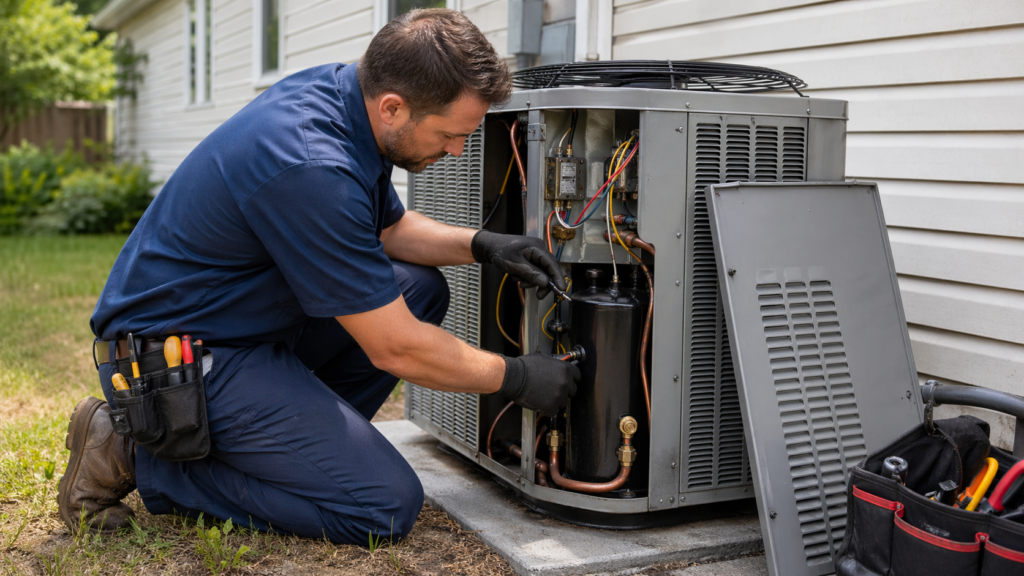
Signs That the Compressor May Be Failing
Compressor problems rarely appear without warning. In many homes, the first signs are not dramatic, but they do indicate that the cooling system is under stress. If these changes are ignored, the unit may continue to lose performance until it can no longer cool the home properly.
Some of the most common warning signs include:
- warm or weak air coming from the vents
- longer cooling cycles than usual
- unusual noises when the system starts or runs
- frequent tripping or unexpected shutdowns
- reduced cooling during the hottest part of the day
- rising energy bills without another clear cause
These symptoms do not always mean the compressor has completely failed, but they do suggest that the system needs professional diagnosis. In many cases, early inspection helps determine whether the issue can be corrected or whether the compressor is already approaching the point where replacement makes more sense.
Why Compressor Problems Often Get Worse Over Time
The compressor is one of the most important components in an air conditioning system, which is why small issues around it tend to grow into larger ones. When the system continues running under strain, other parts may also begin to suffer. What starts as reduced cooling performance can eventually affect efficiency, reliability, and the overall condition of the unit.
Compressor-related issues often become more serious because:
- the system works harder to reach the set temperature
- longer cycles increase wear on internal components
- electrical stress can affect startup and operation
- poor cooling creates higher energy use
- delayed service limits repair options later
For homeowners, waiting too long can turn a manageable system issue into a more expensive decision. The earlier the problem is diagnosed, the easier it is to understand whether repair is still practical or whether replacement is the better long-term solution.
When Replacement Becomes the More Practical Option
Not every compressor issue leads immediately to replacement, but there are situations where continuing to repair the system is no longer the most practical choice. If the unit is older, cooling performance keeps dropping, or the compressor has already experienced significant wear, replacement may provide a more reliable long-term result.
Homeowners often start considering AC compressor replacement when:
- the system no longer cools the home consistently
- compressor-related repairs are becoming more frequent
- energy costs keep rising without improvement
- the unit struggles during periods of high outdoor heat
- the overall system is already nearing the end of its service life
In these cases, replacement is not only about fixing the immediate problem. It can also help restore dependable cooling, improve efficiency, and reduce the risk of repeated breakdowns during the hottest months of the year.

Repair or Replacement: How Homeowners Can Make the Right Decision
When a compressor problem is confirmed, the next question is usually whether the system should be repaired or whether replacement is the better path. The answer depends on more than one factor. Homeowners need to look at the age of the unit, the severity of the issue, the overall condition of the system, and how often cooling problems have appeared in recent seasons.
A replacement discussion usually becomes more relevant when:
- the system is already older and less efficient
- major repairs have been needed more than once
- cooling performance continues to decline
- the compressor issue affects overall system reliability
- repair costs are high compared to the value of the unit
In some cases, repair may still be reasonable, especially if the system is otherwise in good condition and the problem is caught early. But when the unit has a history of performance issues or struggles to keep the home comfortable during peak summer weather, replacement often becomes the more practical and more predictable long-term choice.
A Better Way to Respond to Major AC System Stress
Compressor trouble is one of the clearest signs that an air conditioning system needs serious attention. While some performance issues can be corrected with smaller repairs, ongoing compressor stress usually points to a deeper problem that affects the system as a whole. Ignoring those signs often leads to weaker cooling, higher operating costs, and a greater chance of a full breakdown at the worst possible time.
For homeowners, the most practical step is to act early and make decisions based on the full condition of the system. When cooling performance drops, energy use rises, and the unit struggles to keep up, it becomes important to evaluate whether repair still makes sense or whether replacement will deliver more reliable results. A timely response helps protect comfort, reduce future disruption, and keep the home better prepared for hot weather.