Kitchen cupboards often hold several deep cooking vessels that look similar at first glance. Yet a saucepan, a stewpot and a casserole dish are each designed for a particular way of cooking. Knowing their differences helps you choose the right tool, cook more evenly and store leftovers more effectively.
Three vessels, three purposes
When browsing a range of saucepans and stewpots, the first thing to notice is their shape. A saucepan is tall, with straight sides, a single long handle and a relatively small base. A stewpot is wider and deeper, with two short side handles and a larger capacity. A casserole dish is usually lower and heavier, with a fitted lid, and is often designed to go into the oven as well as on the hob.
These differences in shape are not just cosmetic. They affect how heat spreads, how quickly liquid evaporates and how easily the vessel can be moved around the kitchen.
The saucepan: precision and everyday tasks
The saucepan is the most versatile item of the three. Its long handle makes it easy to lift, tilt and pour, while its narrow base heats up quickly. It is well suited to:
- boiling eggs, rice, pasta in small quantities or vegetables;
- preparing sauces, custards and gravies that need regular stirring;
- reheating soups or single portions of leftovers;
- warming milk or melting butter and chocolate.
Because the surface area is limited, liquid evaporates relatively slowly, which gives better control over reductions and delicate preparations. Most households benefit from having two or three sizes.
A stainless steel saucepan and a large stewpot with lids on a gas hob
ALT: Saucepan and stewpot side by side on a hob, showing the difference in size and handles
The stewpot: volume and long cooking
The stewpot comes into its own when quantity matters. Its generous capacity and two side handles make it safer to carry when full. It is the natural choice for:
- stocks and broths made from bones and vegetables;
- large batches of soup, chilli or pasta sauce;
- cooking pasta or potatoes for a family or a group;
- batch cooking meals to be portioned and frozen.
The wide base distributes heat across a larger area, so ingredients brown more evenly before liquid is added. A tight lid limits evaporation during long simmering on the hob.
The casserole dish: slow cooking and oven use
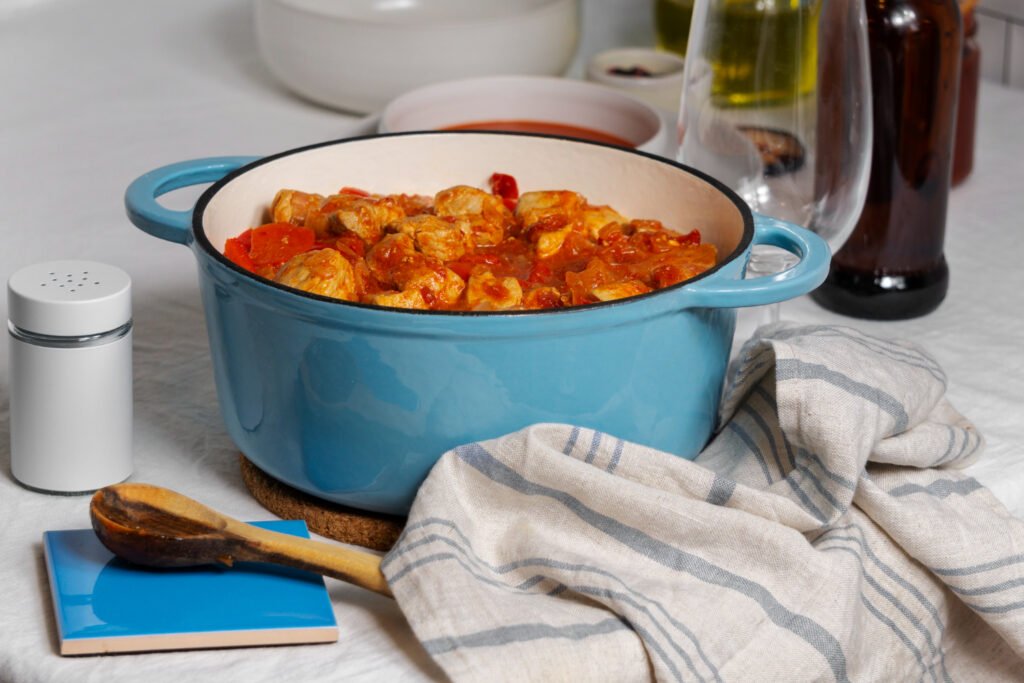
The casserole dish is designed for gentle, prolonged cooking. Its thick walls retain heat and release it steadily, which suits tougher cuts of meat, pulses and root vegetables that need time to become tender. Many casserole dishes can move from hob to oven, so you can sear ingredients first and then finish the dish at a low temperature. It is ideal for braises, stews, pot roasts and baked rice or bean dishes. Some models can also go straight to the table, reducing the need for extra serving dishes.
Choosing the right one and storing food afterwards
A simple rule can guide your choice: use a saucepan for small quantities and precise tasks, a stewpot for large volumes cooked on the hob, and a casserole dish for slow cooking that benefits from the oven.
Whichever vessel you use, food should be allowed to cool before storage, ideally within two hours of cooking. Transfer leftovers into airtight containers rather than keeping them in the cooking pot, then refrigerate or freeze them in portions. Glass containers are practical here, as they do not absorb odours and allow you to see the contents at a glance. Before using any cookware, check the manufacturer’s instructions to confirm whether it is suitable for oven, dishwasher or induction use.