A small apartment has a way of making ordinary things look bigger than they are. Three pairs of shoes become an obstacle course. A stack of books takes over the end table. One extra cabinet makes the living room feel like a furniture showroom with nowhere to stand.
The usual advice is to “use your walls.” Fair enough, but a wall covered in shelving can make a compact room feel even more crowded. Better vertical storage works with the apartment’s proportions. It gives everyday objects a home above floor level, keeps the brightest views open and doesn’t require a permanent remodeling project.
Here are the places where going upward genuinely helps—and the few spots where a little breathing room matters more.
Vertical Storage Ideas for a Small Living Room
Start by looking at the room from its entrance. What do you see first? A window, the sofa, a blank wall, the side of a bookcase? That first view has an outsized effect on how spacious the room feels.
If you have a tall bookcase beside the window, try another position before buying anything new. A bookcase grouped with the media unit on a solid wall can create one organized storage zone. The window gets its light back, and the room no longer feels divided into little obstacles.
Inside the bookcase, make the lower sections work hardest. Put books, games and everyday objects where you can reach them. Use closed boxes for the messier bits and leave a few shelves partly open. A shelf packed from edge to edge has plenty of capacity, but visually it reads as a wall of stuff.
This is also where the scale of your furniture counts. One well-placed bookcase often looks calmer than three skinny shelving units scattered around the room. Tall cabinets and bookcases that could tip need the manufacturer’s specified anchoring; in a rental where that isn’t possible, use lower stable pieces and put vertical storage elsewhere.
Use the Back of Doors for Hidden Apartment Storage
The back of a door is one of the few places where extra storage doesn’t have to become part of the decor.
An over-door organizer on a bedroom door can hold scarves, small bags and accessories. On an interior closet door, shallow pockets can keep belts, folded shopping bags or hair accessories together. The entry closet is a natural place for hats and light seasonal items that tend to migrate onto the nearest chair.
The best version is a little boring. Everything has a pocket, the door closes properly and nobody notices the organizer until they need something. That’s a much better result than adding another set of baskets to the floor.
Measure the gap at the top of the door before ordering a hanging system. Some doors have very little clearance. You can achieve the same tidy effect inside an existing cabinet if the door hardware makes an over-door rack impractical.
Make a Small Apartment Closet Work From Top to Bottom
Closets are where vertical storage earns its keep. The mess is mostly behind a door, so you can be much more practical with the available height.
Think in three zones. The middle belongs to what you wear all week: shirts, pants, dresses and the bag you carry to work. The upper shelf is for seasonal clothes, extra bedding and rarely used bags. Shoes and heavier boxes can occupy the lower area, where they’re easy to lift.
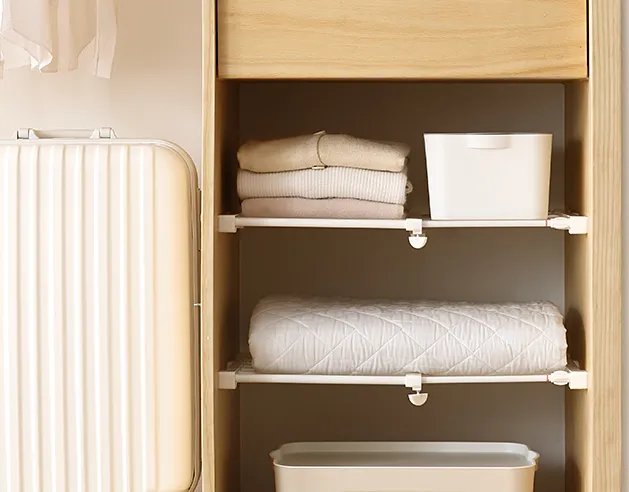
A hanging fabric organizer creates extra levels for folded clothes without another dresser. Shelf risers help when the existing shelf is too tall for the things on it. A few dividers can rescue a wide drawer that currently holds socks, accessories and a tangle of belts in one heap.
Don’t divide the closet evenly just to make it look symmetrical. Give hanging clothes the space they need and use the remaining width for folded storage. An odd-looking arrangement that works every morning is better than a perfect row of boxes you have to dismantle.
For renters making the most of built-in closets, small-space storage organizers offer a more flexible route than a custom closet installation. Choose inserts and containers that fit the shelves you already have, and you’ll be able to rearrange them when your wardrobe changes—or when you move.
Stack Smarter Inside Kitchen Cabinets
Kitchen storage is a perfect example of useful height hiding in plain sight. Open a cabinet and look at how much air sits above the mugs or plates. That unused space can often take another layer without adding anything to the room itself.
Try a freestanding shelf riser above a row of cups. Keep frequently used plates below and lighter items above. In a deep pantry cabinet, put smaller packets in a handled bin so the back row becomes accessible instead of forgotten.
The inside of a cabinet door may have room for a slim hanging holder for lightweight items, as long as the door closes without hitting the shelves. A tiered organizer makes small jars easier to see. These are modest changes, but they can free enough space to retire the spare trolley that’s been sitting in the walkway.
Open shelving has a place in a beautiful kitchen, of course. A row of favorite cups or a few jars can look lovely. The half-used flour bag, the collection of mismatched lids and the appliances you rarely touch are better tucked away.
Keep Bathroom Storage Tall, Slim and Uncluttered
A bathroom is where enthusiastic storage shopping often backfires. A caddy at the sink, another near the shower, a rack behind the door and hooks along the wall can make a tiny room feel crowded, even when every item has a purpose.
Give the room a main storage zone. If there’s a narrow space next to the vanity, a slim freestanding shelf or rolling cart can hold towels and toiletries without consuming the counter. If you already have a cabinet beneath the sink, use stackable organizers inside it before bringing in another piece of furniture.
Look upward within the storage that’s already there. Upper shelves can hold spare supplies; the lowest, easiest-to-reach level should carry what gets used every morning. Keep the area around the mirror comparatively clear, and the bathroom will feel brighter and less busy.
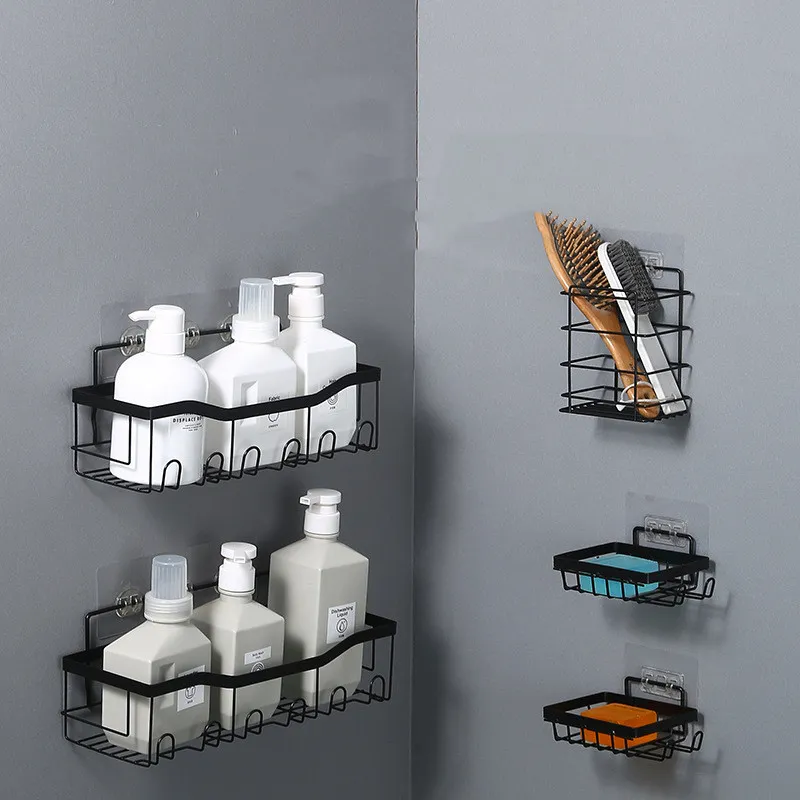
A freestanding over-toilet unit can be tempting, but don’t put a tall, top-heavy structure there without a safe way to secure it. In a rental, a smaller stable shelf or a basket in an existing cabinet is often the more sensible choice. It’s one of the few design decisions where an apparently compact solution can make the room feel much less comfortable.
Create a Vertical Work Zone Without Losing Your Desk
Even a tiny work nook can benefit from a little height. The problem usually isn’t the laptop. It’s everything around it: notebooks, chargers, pens, mail and the paperwork you meant to file last week.
If your desk sits near an existing bookcase, dedicate one shelf to office supplies and keep the desktop mostly clear. A slim desktop organizer can hold notebooks and small stationery upright instead of spreading them across the surface. If there is a cabinet nearby, move the less-used supplies into it and keep only the daily essentials at hand.
This is a good place to use vertical space quietly. You shouldn’t have to look at a wall of office equipment from the sofa every evening. A few well-chosen containers can make a work corner disappear back into the living room once the laptop closes.
Make Open Shelves Feel Like Part of the Room
There is a difference between a shelf that stores things and a shelf that makes a room feel lived in. The most attractive ones do a bit of both.
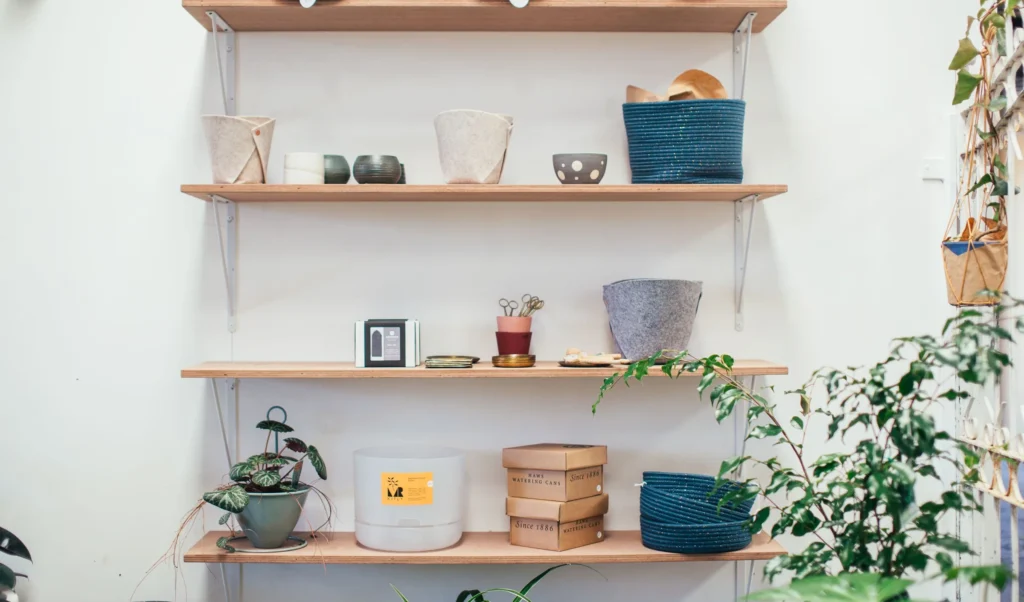
Keep a group of books together. Give a framed photo room beside a ceramic bowl. Hide the spare cables and miscellaneous objects in one or two matching baskets at the bottom. You don’t need a showroom arrangement, just enough repetition and empty space for the eye to settle.
Try standing across the room and looking at the shelf as a shape rather than a collection of individual objects. If all you see is a busy grid of little items, move a few into closed storage. The remaining objects will look more intentional, and the wall will feel lighter.
Where the shelf sits matters just as much. A crowded unit beside the apartment’s only window can steal daylight. Put that same unit against a more solid wall and the whole space may feel different, even though you haven’t removed a single possession.
A Studio Apartment Layout That Uses Height Well
Picture a studio with a bookcase wedged beside the window, two storage baskets beside the sofa, a little rolling cart in the kitchen and a desk covered in paperwork. There is storage everywhere, yet the apartment still feels short of room.
First, move the bookcase to an appropriate wall where it can be secured, and let it become the main living-room storage piece. Give books and daily items the easy-to-reach shelves; put the less attractive odds and ends in boxes below. Relocate the paperwork to a single organizer by the desk.
Next, use a shelf riser inside the kitchen cabinet. If it holds the mugs and bowls that were living on the trolley, the trolley can go. In the closet, add a hanging organizer for folded clothes and move seasonal items up to the top shelf.
Now look from the entrance again. The window is visible, the walkway has opened up and the living room has one clear storage area rather than several competing ones. The apartment hasn’t grown. It simply has a layout that makes better use of its height.
Know Where to Stop Going Up
Vertical storage isn’t an instruction to fill every wall. Some of the most effective small-apartment design choices involve leaving a wall alone.
Keep bulky furniture away from the best source of daylight when you can. Let a low console stretch beneath a picture instead of lining the entire wall with tall units. Leave a little room around a favorite chair or lamp. Those pauses give your eye somewhere to rest.
That balance is especially helpful in a rental, where your storage needs to adapt to the space rather than demand permanent alterations. If you’re gathering ideas for your next apartment, RenterSet focuses on flexible pieces and renter-friendly ways to make everyday rooms work harder.
A small apartment can hold books, artwork, a comfortable chair and all the ordinary evidence of a life being lived. It just doesn’t need to display every bit of storage at once.
The room will still be small. It just won’t spend all day reminding you.