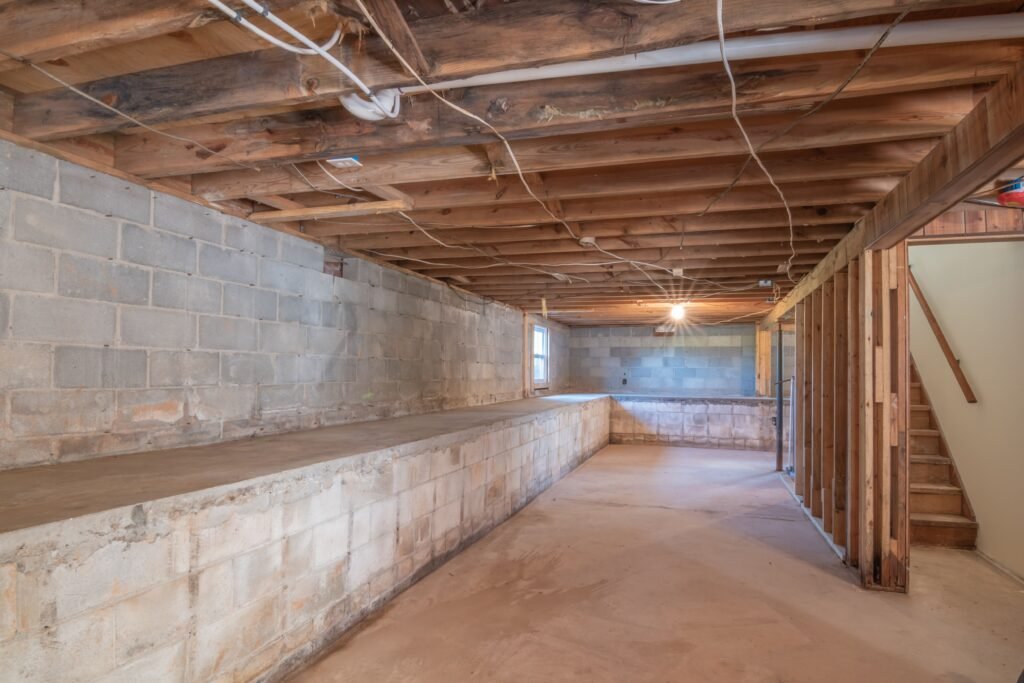
Basement moisture is one of those home problems that punishes delay. A small crack or a damp corner that looks manageable in spring can quietly become mould, rot, and structural damage by the time autumn arrives. Catching the early signs – and knowing when to bring in a professional – can save homeowners tens of thousands of dollars and months of disruption.
Early Warning Signs to Watch For
- Efflorescence – white or grey powdery deposits on concrete or block walls.
- Musty or earthy smell – even without visible dampness, a persistent odour almost always means mould is growing somewhere behind a finished surface.
- Rust stains near floor drains, pipe penetrations, or at the base of metal shelving units.
- Bubbling or peeling paint on basement walls, or soft patches in drywall near the floor.
- Cracks along the wall-floor joint – the seam where the wall meets the floor is the most common water entry point in poured concrete foundations.
Understanding Where Water Is Coming From
| Entry Point | Likely Cause | Urgency |
|---|---|---|
| Wall-floor joint | Hydrostatic pressure, failed drainage tile | High |
| Cracks in poured concrete walls | Shrinkage, settlement, freeze-thaw cycles | Medium-High |
| Through window wells | Blocked drainage, grading issues | Medium |
| Condensation on walls and pipes | Indoor humidity, not groundwater intrusion | Low – ventilation fix |
Identifying the entry point matters because the fix depends entirely on the source. Water coming through the wall-floor joint is a drainage problem. Water seeping through a crack in the wall is a structural and sealing problem. Condensation on cold surfaces is a ventilation and humidity problem. Each requires a different solution.
What Homeowners Can Fix Themselves
Several minor moisture problems have simple, low-cost solutions. Ensure your downspouts extend at least two metres from the foundation before discharging. Check that the soil around your home slopes away from the foundation wall. Clear window well drains of debris and replace compacted drainage gravel.
For small, dormant cracks in poured concrete walls – cracks that show no sign of active water entry and are not growing – hydraulic cement or polyurethane injection can provide a durable seal. These products are widely available at hardware stores and are manageable for a careful DIYer working on a dry wall surface.
When to Bring In a Professional
Call a professional when water enters during or immediately after rain, when cracks are wider than 6mm or visibly growing, when there is any horizontal cracking or wall deflection, or when a previous DIY repair has not held through a second season.
Specialists in foundation crack repair Toronto and surrounding municipalities can determine whether the issue needs to be addressed from inside (interior drainage and sump pump) or outside (excavation and membrane repair), or both. Getting the diagnosis right the first time prevents spending money on the wrong solution.
What to Ask Before Hiring Anyone
- What is the actual cause – drainage failure, membrane failure, or a structural crack?
- Does the fix address the source, or does it manage water after entry?
- Is the work covered by a written warranty, and is it transferable to a future buyer?
- Will a permit be required?
References
- CMHC – Investigating Moisture in Basements
- Health Canada – Mould in the Home
- National Research Council Canada – Building Research