Every minute you spend reading this, a silent predator in your attic is likely devouring your monthly budget. In the blistering heat of Florida, your home isn’t just a shelter; it is a pressurized vessel fighting a losing battle against a 150-degree ceiling. If your house was built more than a decade ago, you are likely relying on a “thermal shield” that has already surrendered. Attic insulation replacement is not a cosmetic upgrade—it is a critical mechanical restoration. Most homeowners don’t realize that insulation is a decaying asset; it settles, loses its R-value, and eventually becomes a useless layer of dust that forces your AC compressor to run until it reaches a premature death.
The physics are simple: heat moves to cold. In a typical West Park or South Florida home, the attic acts as a massive thermal battery. When your insulation is compromised, that stored energy radiates directly through your drywall. At Attic Fanatics, we see it daily—men who have invested thousands in high-end HVAC units only to have that expensive cold air leak through the ceiling because the attic barrier is obsolete. Relying on old, matted fiberglass is like trying to keep a house warm in a blizzard with a screen door. The density is gone, the air pockets are collapsed, and the protection is non-existent.
Why Your Current Attic Insulation Replacement Strategy Is Costing You Thousands 🏗️
The primary enemy of efficiency is “settling.” Over time, the loose-fill material that once stood twelve inches high compresses to six or seven. This isn’t just a loss of height; it’s a catastrophic failure of the material’s ability to trap air. In the professional world of attic insulation replacement, we measure success by the consistency of the thermal blanket. Once that blanket develops thin spots—often caused by past roof leaks or simple gravity—you get “thermal bridging.” This means the heat bypasses the insulation entirely, turning your ceiling joists into heating elements that bake your living space from the top down.
Furthermore, Florida’s humidity introduces a biological variable that most DIY-guides ignore. Old insulation acts as a giant filter, trapping skin cells, dust mites, and moisture from the Gulf air. This creates a heavy, sodden mass that no longer resists heat but actually stores it, creating a “hot rock” effect above your bedrooms. A professional replacement of attic insulation removes this bio-burden, clearing out years of accumulated allergens and potential mold spores that your AC system’s intake can pull into your family’s breathing air. When we perform a total extraction at Attic Fanatics, we aren’t just removing old material; we are decontaminating the home’s “lungs” and ensuring the structural wood can finally breathe.
The Technical Reality of Thermal Degradation in High-Humidity Zones 🌡️
For a homeowner, the attic is often “out of sight, out of mind,” but for a building scientist, it is the most volatile zone of the property. In South Florida, the delta between your living room (72°F) and your attic (150°F) is massive. This pressure difference forces hot air through every wire penetration, plumbing stack, and recessed light fixture. If your insulation for attics is old, it acts as a porous sponge rather than a barrier. The material becomes saturated with microscopic particulates, which increases its thermal conductivity. Essentially, the older the material, the faster it “transmits” heat instead of “resisting” it.
Engineering a Superior Thermal Barrier for the Florida Climate 🛡️
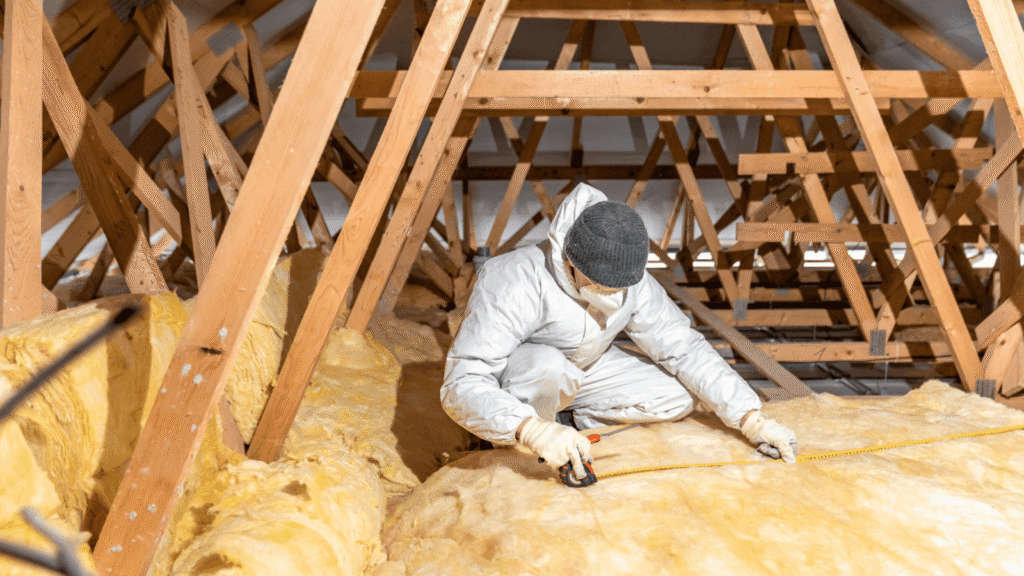
A true expert doesn’t just “top off” old insulation. That’s a band-aid fix that hides underlying issues like air leaks or rodent damage. A calculated attic insulation replacement project must begin with total air sealing. Without sealing the penetrations where electrical wires and pipes enter the attic, your cooled air escapes like water through a sieve. Modern blow-in materials, when applied at the correct density, create a monolithic barrier that reflects radiant energy back toward the roofline rather than absorbing it into the structure of the house.
- 📍 Decisive Energy Savings: Upgrading to a modern R-38 or R-49 standard can slash cooling-related power consumption by up to 25% immediately, putting money back into your mortgage or family vacations.
- 📍 Structural Preservation: Proper insulation prevents the “superheating” of roof deck shingles, which can brittle and fail prematurely under the relentless Florida sun, saving you a $20,000 roof replacement.
- 📍 Mechanical Longevity: By reducing the heat gain, you prevent the constant AC cycling that leads to expensive capacitor and motor failures during the peak of August.
- 📍 Pest Deterrence: Modern borate-treated cellulose or high-quality fiberglass is far less inviting to rodents and insects than the decaying, organic-rich materials of the 1990s.
The Hidden Connection Between Attic Health and Family Wellness 🏠
If you’ve noticed your family suffering from unexplained congestion or “summer colds,” the culprit is often right above your head. Old insulation is a magnet for moisture in our climate. When that material stays damp, it becomes a sanctuary for opportunistic fungi and bacteria. By investing in proper attic insulation replacement, you are stripping away a decade of dust and contaminants. This is an essential move for any head of household who prioritizes the health of his children and the long-term integrity of the property.
The reality is that your home is a complex system. When one part of that system—the thermal envelope—fails, every other component has to overcompensate. You pay for it in higher bills, frequent repairs, and a house that never truly feels “crisp” in July, no matter how low you set the thermostat. Taking control of your attic’s environment is the most effective way to “harden” your home against the rising costs of energy and the relentless heat of the Florida peninsula. It is a one-time tactical strike that yields dividends for the next twenty years, ensuring that your home remains a sanctuary rather than a heat-trapping liability.