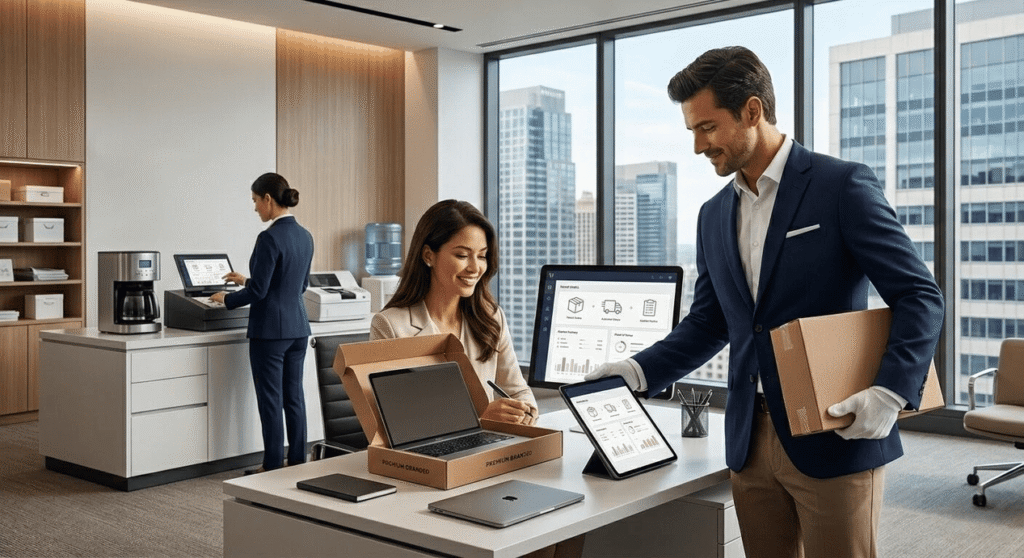
Online shopping has fundamentally changed how residential buildings operate. A decade ago, property managers handled mostly letters, small parcels, and occasional courier deliveries. Today, apartment complexes, condominiums, and residential towers receive hundreds of packages every week.
With residents ordering everything from groceries to furniture online, the building’s mailroom has become one of the busiest operational areas in modern residential properties.
For property managers, this shift presents a new logistical challenge. Managing deliveries efficiently now plays a major role in maintaining resident satisfaction and building operations.
“In many residential communities today, the mailroom is one of the most active spaces in the entire property.”
As online shopping continues to grow, property managers are adopting new strategies and technologies to keep up.
The Explosion of Residential Deliveries
E-commerce has significantly increased the volume of packages entering residential buildings. Residents expect fast delivery, and many place multiple orders each week.
For property staff, that means a steady stream of couriers arriving throughout the day.
Common delivery challenges now include:
| Delivery Challenge | Impact on Property Staff |
| High parcel volume | Limited storage space |
| Multiple carriers | Complex intake process |
| Manual logging systems | Slower package processing |
| Missing delivery records | Resident complaints |
| Unclaimed parcels | Mailroom overcrowding |
What used to be a simple mail collection process now resembles a small logistics operation.
Without the right systems in place, managing these deliveries can quickly become overwhelming.
Why Traditional Mailrooms Are Struggling
Many residential buildings still rely on manual methods to track deliveries. Staff may record parcels in notebooks, spreadsheets, or basic logs.
This process is time-consuming and error-prone.
Typical manual workflow includes:
- Accepting the delivery from the courier
- Writing down the recipient’s unit number
- Logging the package in a spreadsheet or notebook
- Contacting the resident manually
- Storing the parcel until pickup
When dozens of packages arrive each day, this process can slow down staff productivity and increase the risk of misplaced deliveries.
To keep up with growing demand, property managers are increasingly turning to digital solutions.
The Rise of Smart Mailroom Systems
Technology is helping residential properties modernize delivery handling.
Using modern mailroom management software allows staff to scan incoming packages, automatically log delivery information, and instantly notify residents.
Instead of manually tracking parcels, property teams can rely on centralized systems that organize and track every delivery entering the building.
One of the biggest advantages of these platforms is improved efficiency. Staff can process packages quickly while maintaining accurate delivery records.
Many property managers are now implementing streamlined parcel management software to handle the rising volume of e-commerce deliveries without overwhelming staff.
Faster Package Intake with Scanning Technology
One of the most useful innovations in modern mailroom systems is automated parcel scanning.
Instead of typing information manually, staff can scan package labels so the system can capture important details instantly.
These systems can extract:
| Parcel Data Captured | Why It Matters |
| Recipient name | Ensures correct delivery |
| Apartment or unit number | Speeds up sorting |
| Carrier information | Tracks courier sources |
| Tracking numbers | Improves parcel traceability |
| Delivery photos | Adds proof of receipt |
This automation dramatically reduces manual work while improving accuracy.
In high-volume residential buildings, the time saved each day can be substantial.
Improving the Resident Experience
For residents, the most noticeable improvement from modern delivery systems is faster communication.
Instead of waiting for staff to manually send notifications, residents receive instant alerts when their package arrives.
These notifications typically include pickup instructions and delivery confirmation, allowing residents to collect parcels at their convenience.
Benefits for residents include:
- Faster delivery notifications
- Reduced risk of lost packages
- Clear pickup instructions
- Greater confidence in building security
When the mailroom runs smoothly, residents experience fewer frustrations and property managers receive fewer complaints.
Security and Accountability in Busy Buildings
Security is another major concern when handling large volumes of deliveries.
Packages often contain valuable items, and misplaced deliveries can quickly become a source of disputes.
Digital systems create a clear chain of custody for every parcel.
Features that improve security include:
- Digital delivery logs
- Photo capture of incoming packages
- Timestamped pickup confirmations
- Resident notification records
These features provide transparency and accountability throughout the delivery process.
“The best mailroom systems do more than store packages. They provide full visibility into every delivery that enters the building.”
Preparing for the Future of Residential Deliveries
The growth of online shopping shows no signs of slowing down. As e-commerce continues expanding, residential buildings will likely see even higher package volumes in the coming years.
Forward-thinking property managers are preparing by investing in smarter logistics systems that can scale with demand.
Modern delivery management tools allow residential communities to maintain organized mailrooms, reduce staff workload, and improve the overall living experience for residents.
In today’s residential environment, efficient package management is no longer a luxury. It has become a necessary part of delivering a well-managed property.