A Technical Guide to Creating Durable, Efficient, and Code-Compliant Flat Roofing Systems in the Carolina Climate
For architects designing commercial buildings in North Carolina, the roof represents far more than the final element completing a structure’s envelope. In a region characterized by intense summer heat, heavy rainfall, hurricane threats, and freeze-thaw cycles, flat roof design decisions directly impact building performance, longevity, maintenance costs, and occupant comfort for decades to come.
While flat roofs offer numerous advantages for commercial construction – including cost efficiency, accessibility for mechanical equipment, potential for green roof or solar installations, and aesthetic flexibility – they also present unique design challenges that require careful consideration of materials, drainage, structural capacity, and regional climate factors.
This guide examines the critical factors architects must address when designing commercial flat roofing systems for North Carolina’s demanding climate conditions.
Understanding North Carolina’s Climate Challenges
According to The Flat Roof Specialists, Raleigh’s commercial roofing experts, architects must understand the specific climate stresses that will affect their designs throughout the building’s lifecycle before selecting roofing systems and details.
Heat and Solar Radiation: North Carolina experiences prolonged periods of intense heat and UV exposure from May through September, with temperatures frequently exceeding 90°F and heat index values climbing even higher. This sustained thermal stress causes significant expansion and contraction cycles in roofing membranes and can accelerate material degradation through UV breakdown. Dark-colored roofing materials can reach surface temperatures of 150-180°F during peak summer conditions, creating substantial cooling loads for building systems.
Precipitation Patterns: The state averages 40-50 inches of annual rainfall depending on location, with significant seasonal variation. Summer thunderstorms can deliver 2-3 inches of rain within hours, creating intense demands on drainage systems. Coastal areas face additional precipitation from tropical systems, while mountain regions may experience snow and ice accumulation. These varied precipitation patterns require robust drainage design with adequate capacity for extreme events.
Hurricane and Wind Events: Coastal and Piedmont regions face hurricane season from June through November, with potential for sustained winds exceeding 75 mph and gusts reaching 100+ mph. Even inland areas like Raleigh experience tropical storm remnants with high winds and heavy rainfall. Wind uplift forces on flat roofs can be substantial, requiring careful attention to membrane attachment and edge details.
Freeze-Thaw Cycles: While North Carolina doesn’t experience severe winters, the region does face 20-40 freeze-thaw cycles annually in most areas. Water that penetrates even minor defects can freeze, expand, and cause progressive damage. Morning frost followed by afternoon warmth creates daily cycling during winter months.
Humidity: Year-round high humidity levels (often 60-80%) create conditions where moisture that enters roofing assemblies has difficulty drying. This persistent moisture can lead to condensation issues, accelerated material degradation, and potential for mold growth within roof assemblies.
Drainage Design: The Foundation of Flat Roof Performance
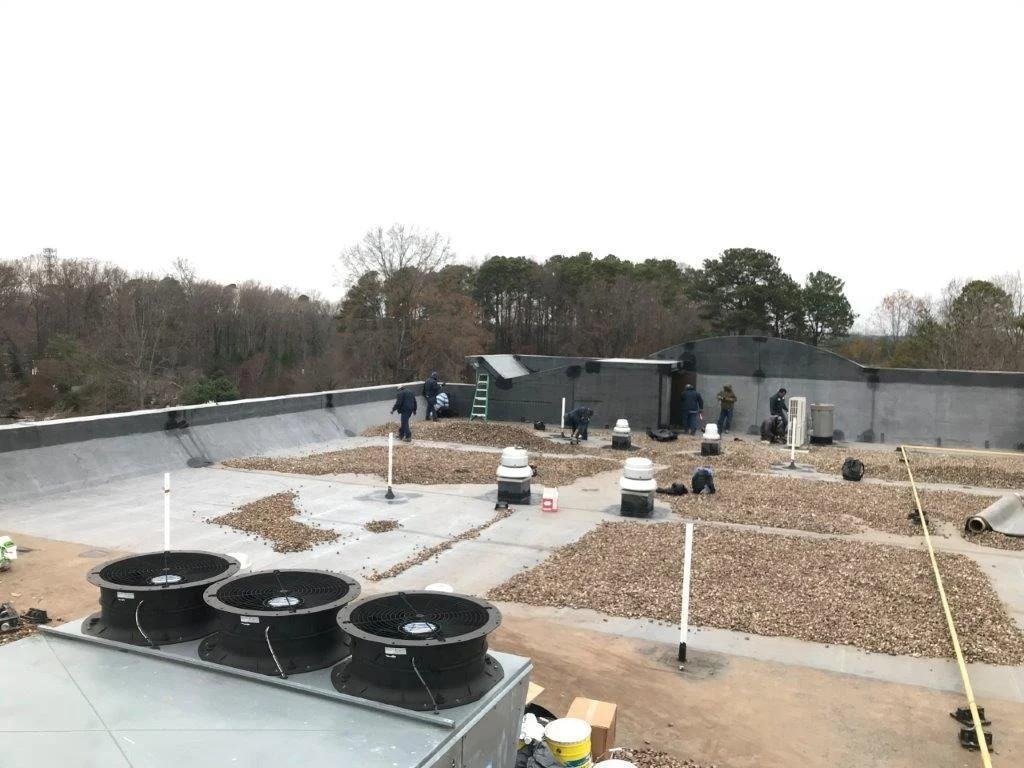
Proper drainage represents the single most critical factor in flat roof longevity (see our article “What Is A Flat Roof?” for more information). Despite the term “flat roof,” these systems must incorporate adequate slope to ensure positive drainage and prevent ponding water.
Minimum Slope Requirements: North Carolina building codes require minimum slopes of 1/4 inch per foot for drainage, though best practices suggest 1/2 inch per foot or greater when possible. This increased slope provides a safety margin that accounts for structural deflection, settlement, and minor construction variations while ensuring positive drainage even as buildings age.
Slope Configuration Options: Architects can achieve proper slope through several approaches. Structural deck slope provides the most reliable long-term solution by incorporating slope into the structural framing itself, eliminating reliance on tapered insulation systems that may be affected by roof traffic or maintenance activities. Tapered insulation systems offer flexibility for retrofit applications or situations where structural slope is impractical, using progressively thicker insulation panels to create drainage gradients. Cricket installations at roof penetrations and equipment locations prevent water accumulation in vulnerable areas.
Drain Placement and Sizing: Interior drain placement should consider both drainage efficiency and architectural requirements. Drains should be located at low points created by the slope design, with maximum spacing determined by drainage capacity calculations. North Carolina’s intense rainfall events require conservative drain sizing – a 10-year, 1-hour rainfall event should be used as minimum design criteria, with consideration given to 25-year or 50-year events for critical facilities.
Overflow Protection: Building codes require secondary drainage (overflow drains or scuppers) set 2 inches above primary drain elevations. This secondary system must have capacity equal to the primary system, providing critical protection if primary drains become clogged. Scupper locations require coordination with building facades to ensure overflow water is directed safely away from the building and doesn’t create hazardous conditions at entrances or walkways.
Ponding Prevention: Areas where water ponds for more than 48 hours after rainfall accelerate membrane deterioration and stress roof structures. Architects must identify potential ponding areas during design and address them through slope adjustment, additional drains, or crickets. Pay particular attention to areas around roof-mounted equipment, at roof-to-wall transitions, and near parapet walls where drainage patterns may be complex.
Membrane Selection: Matching Materials to Performance Requirements
The roofing membrane selection significantly impacts both initial construction costs and long-term performance. Each membrane type offers distinct advantages and limitations that architects must evaluate based on project-specific requirements.
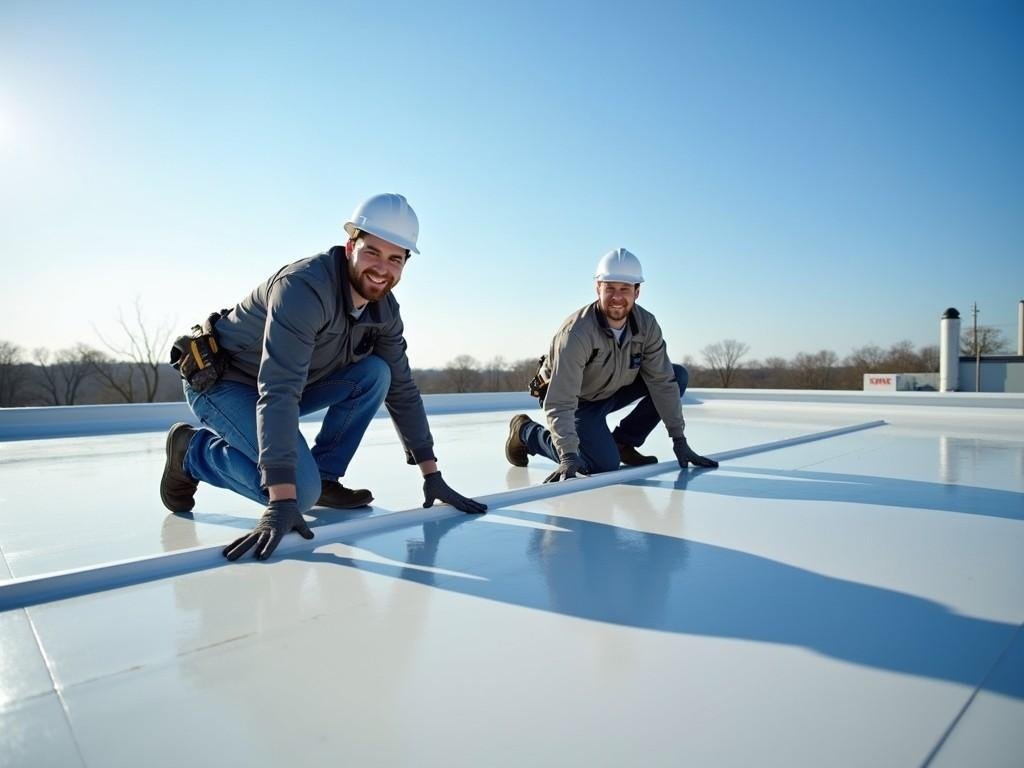
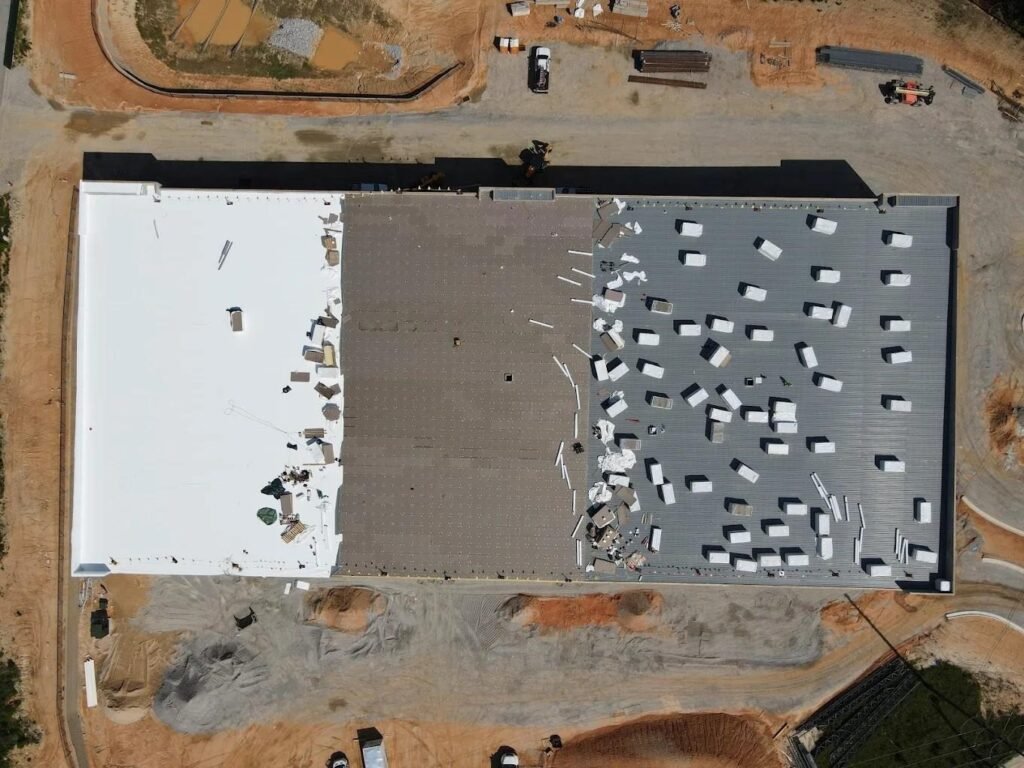
Thermoplastic Polyolefin (TPO): TPO membranes have become increasingly popular for commercial applications due to their combination of performance and value. White TPO provides excellent solar reflectance, reducing cooling loads and meeting energy code requirements in most applications. Heat-welded seams create strong, reliable connections less vulnerable to failure than adhesive-based systems. TPO performs well in North Carolina’s climate, resisting UV degradation and maintaining flexibility across temperature ranges.
However, architects should specify premium TPO formulations (typically 60-mil thickness or greater) for projects requiring long-term performance. Some lower-cost TPO products have shown premature degradation in high-UV environments. Membrane thickness, reinforcement type, and manufacturer reputation should all factor into specifications.
Polyvinyl Chloride (PVC): PVC roofing systems offer superior chemical resistance and fire performance compared to TPO, making them ideal for facilities with potential chemical exposure (restaurants with grease exhaust, industrial facilities, etc.). Like TPO, PVC uses heat-welded seams and provides excellent solar reflectance in white formulations.
PVC typically costs 10-15% more than comparable TPO systems but may provide better long-term value for specific applications. The material maintains excellent flexibility even in cold temperatures, an advantage for North Carolina’s occasional winter weather events.
Ethylene Propylene Diene Monomer (EPDM): EPDM rubber roofing has demonstrated reliable performance for over 50 years and continues to offer advantages for certain applications. The material’s flexibility accommodates building movement and thermal cycling exceptionally well. EPDM is particularly well-suited for irregular roof shapes or renovation projects where detailed fitting is required.
Black EPDM absorbs significant solar heat, increasing cooling loads unless buildings have robust insulation or the roof hosts equipment that benefits from the heat absorption. White EPDM formulations address this concern but typically cost more than black versions. Architects should note that EPDM uses adhesive or tape-based seaming rather than heat welding, requiring meticulous installation to ensure seam integrity.
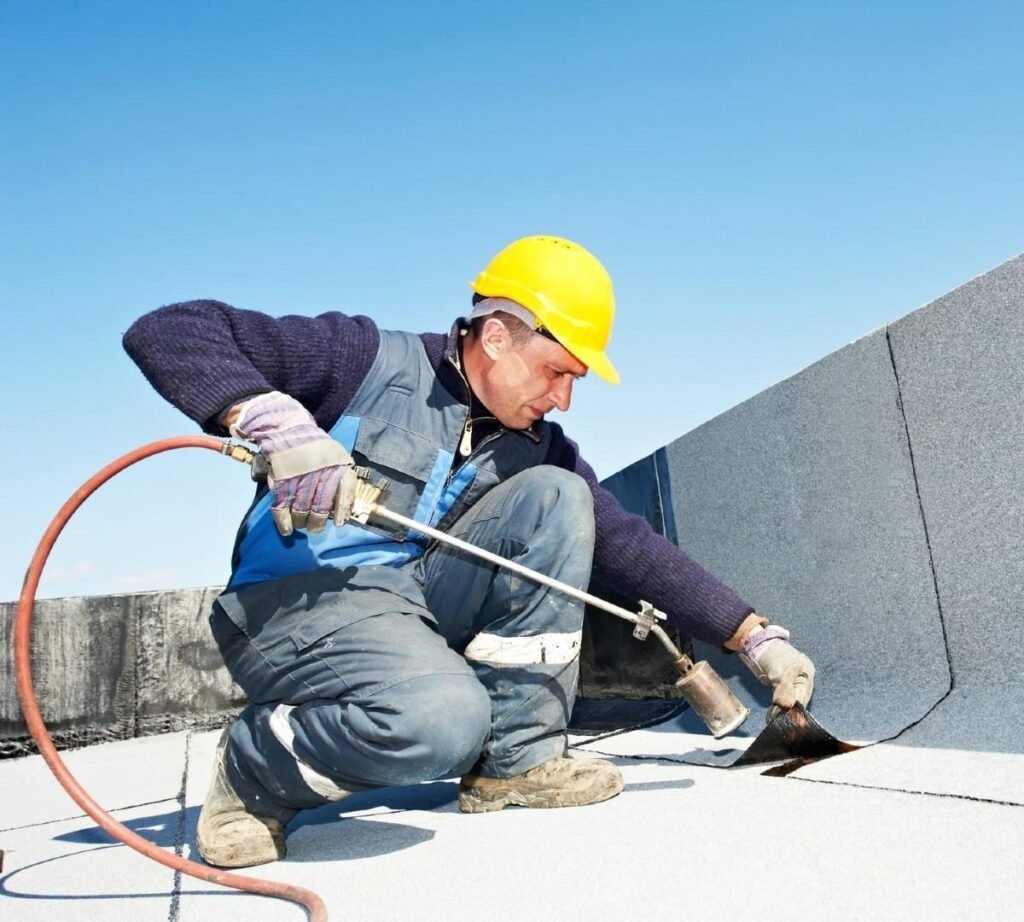
Modified Bitumen: Multi-ply modified bitumen systems provide excellent puncture resistance and can be installed using various methods (torch-applied, hot-mopped, cold-applied adhesives, or self-adhering). These systems work well for roofs with significant foot traffic or equipment loads.
However, modified bitumen’s dark color absorbs considerable heat unless surfaced with reflective granules or coatings. The material may also become soft in extreme heat, potentially creating issues with foot traffic or equipment movement. Consider modified bitumen for mechanical equipment areas or other high-traffic zones while using reflective single-ply membranes for general roof areas.
Built-Up Roofing (BUR): Traditional built-up roofing systems using multiple plies of felt and bitumen topped with aggregate surfacing still have applications in commercial construction, particularly for buildings requiring exceptional durability or puncture resistance. BUR systems excel at withstanding sustained roof traffic and protecting against impact damage.
The weight of built-up systems (especially with aggregate surfacing) requires structural capacity that may increase construction costs. Installation also requires hot asphalt application, creating odor and safety considerations during construction. Energy performance typically requires additional reflective coatings unless white aggregate surfacing is specified.
Insulation Strategy: Balancing Thermal Performance and Structural Reality
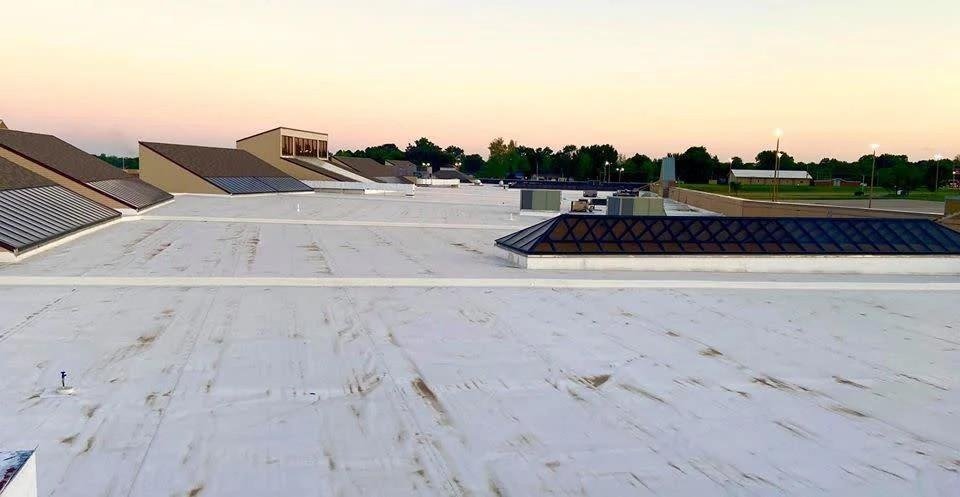
Roofing insulation serves multiple functions beyond thermal performance, including providing structural support for the membrane, managing moisture, and contributing to fire resistance. North Carolina’s climate and energy codes create specific insulation requirements that architects must address.
Thermal Performance Requirements: Current North Carolina energy code requires minimum R-values ranging from R-20 to R-25 for commercial roofing assemblies depending on climate zone and building type. However, architects should consider exceeding minimum code requirements when lifecycle cost analysis supports the additional investment. Enhanced insulation reduces cooling loads during North Carolina’s extended summer season and provides improved comfort while potentially reducing mechanical system sizing.
Insulation Materials: Polyisocyanurate (polyiso) insulation provides the highest R-value per inch of common roofing insulation materials, making it efficient for achieving code requirements with minimal thickness. However, polyiso’s R-value decreases at low temperatures – a consideration for winter performance even in North Carolina’s moderate climate. Combining polyiso with a base layer of expanded polystyrene (EPS) or extruded polystyrene (XPS) creates a hybrid system that maintains better thermal performance across temperature ranges while providing enhanced moisture resistance.
Moisture Management: Insulation systems must resist moisture infiltration while allowing any moisture that does enter the assembly to dry. Vapor retarders should be carefully evaluated based on the specific assembly and interior building conditions. Facilities with high interior humidity (restaurants, pools, laundries) require more robust vapor control than typical office spaces. Improperly designed vapor retarders can trap moisture within roof assemblies, leading to insulation degradation and potential structural damage.
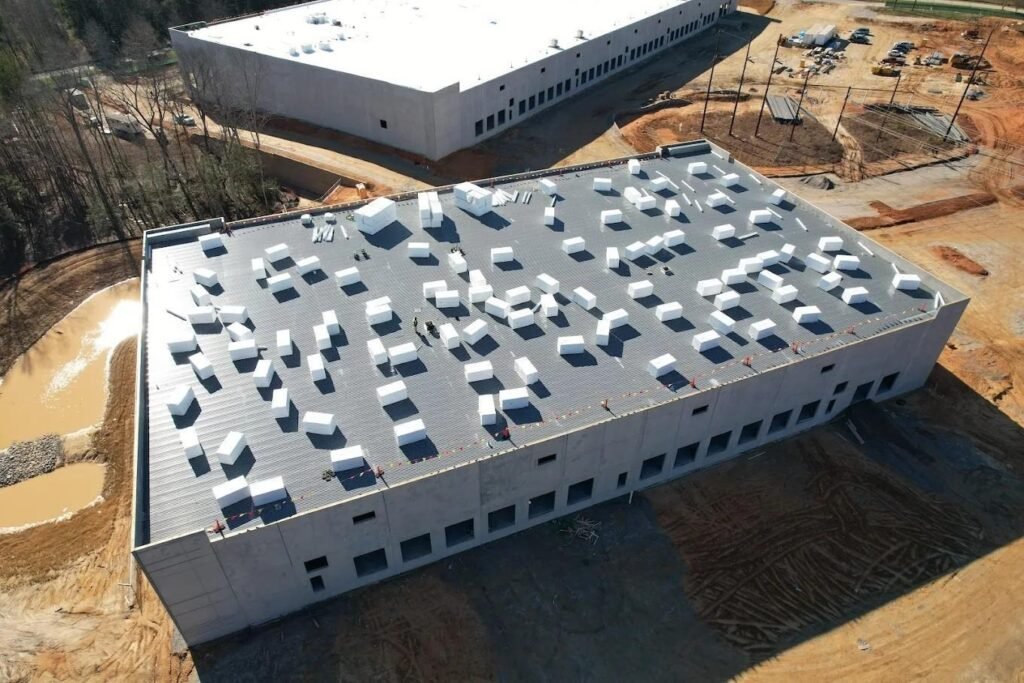
Tapered Insulation Systems: When structural slope is not feasible, tapered insulation systems provide drainage while contributing to thermal performance. Specify cricket insulation at all penetrations and design slope patterns that create clear drainage paths to roof drains. Coordinate tapered insulation layouts carefully with structural framing to avoid valleys that span between supports, which could create deflection and ponding issues.
Structural Considerations for Long-Term Performance
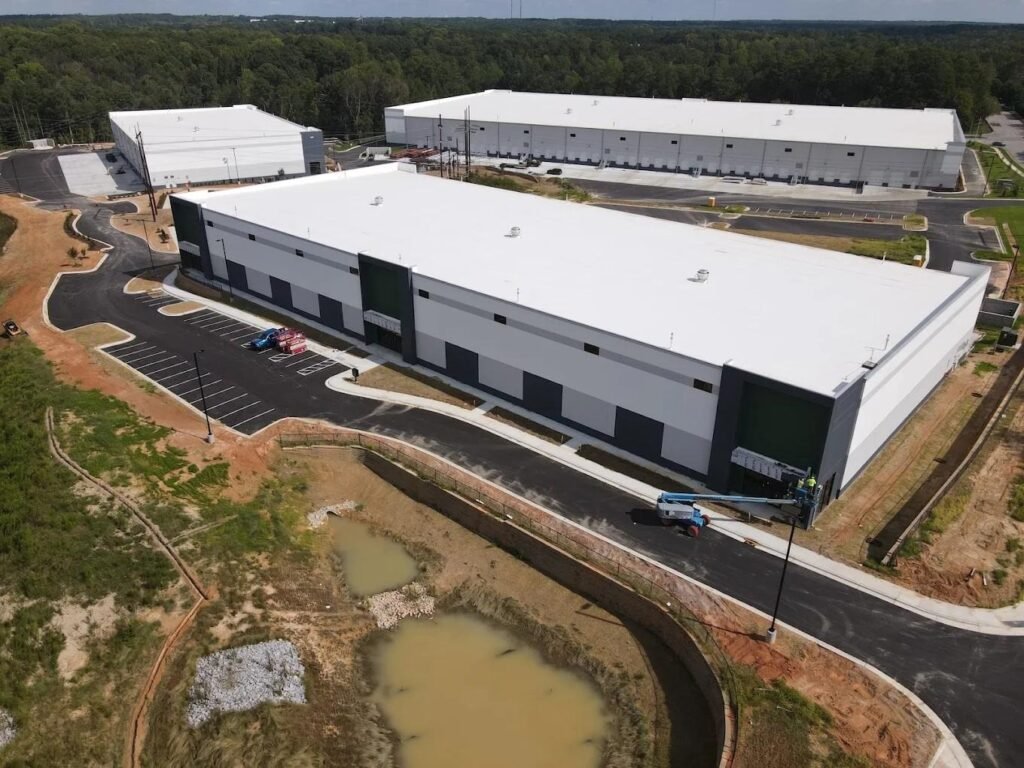
The roof deck and supporting structure must accommodate not only the static loads of the roofing assembly but also environmental loads and the deflection limits necessary for long-term drainage performance.
Deck Selection: Steel deck represents the most common substrate for commercial flat roofs, offering economical spanning capabilities and fire resistance. Specify minimum 22-gauge deck for most applications, with 20-gauge or heavier deck for areas with significant loads or extended spans. Deck profile depth affects both structural capacity and the ability to achieve proper fastener engagement – deeper profiles (1.5″ or greater) generally provide better performance.
Concrete decks (either structural or lightweight insulating concrete over steel deck) provide excellent dimensional stability, superior fastener holding capacity, and enhanced fire resistance. However, concrete decks require careful moisture management during construction and coordination of roofing installation with concrete curing.
Deflection Limits: Excessive structural deflection creates ponding issues even when roofs are initially sloped properly. Limit deflection to L/240 for drainage performance, recognizing that long-term deflection (creep) will exceed initial calculated values. Conservative deflection limits prove especially important for roofs designed with minimum slopes, where even small deflection amounts can create ponding areas.
Parapet Design: Parapets provide aesthetic benefits, equipment screening, and edge protection but create specific technical challenges. Design parapets with minimum 30-inch height for equipment screening and safety. Provide robust coping systems with continuous cleats secured to structure (not just parapet masonry). Ensure through-wall flashing and weeps prevent water accumulation within parapet walls.
Consider the additional dead load, wind loads, and thermal movement of parapet walls during structural design. Parapet failures represent a significant maintenance issue for building owners – proper initial design prevents these problems.
Penetrations and Equipment Integration
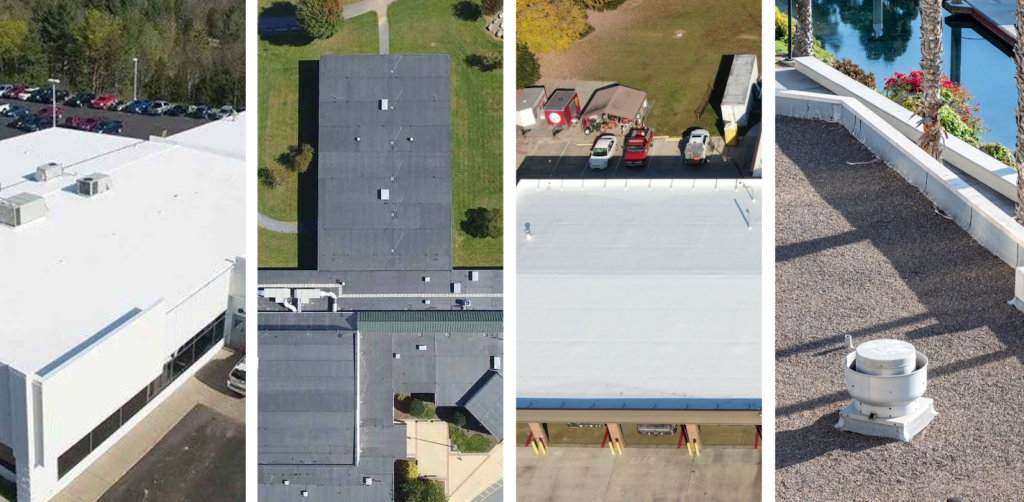
Rooftop equipment placement and penetration details require careful coordination to ensure both functional performance and long-term weatherproofing.
Equipment Placement Strategy: Locate major HVAC equipment and other large penetrations during schematic design, coordinating with structural framing and drainage patterns. Equipment should be positioned to avoid interference with drainage paths and provide adequate clearance for maintenance access. Group equipment when possible to minimize the number of curbs and penetrations requiring weatherproofing.
Curb Design and Flashing: Specify factory-fabricated curbs for all major penetrations, with minimum 8-inch height above finished roof surface (12 inches in areas with potential snow accumulation). Curbs should incorporate continuous cant strips at the base and provide secure attachment points for equipment that accommodate wind loads and seismic requirements.
Flashing details must address both current weatherproofing and future maintenance scenarios. Specify counterflashing that allows roofing contractors to replace base flashing without disturbing equipment. Provide removable covers that allow membrane repairs beneath equipment without complete equipment removal.
Pipe Penetrations: Even small pipe penetrations represent potential leak points that require proper detailing. Specify prefabricated pipe boots appropriate for the roofing membrane type, sized to accommodate pipe movement and thermal expansion. Detail penetrations to ensure positive drainage around all sides – never position penetrations at low points where water accumulates.
Sustainability Considerations
Modern commercial roofing design increasingly incorporates sustainability features that provide environmental benefits while potentially reducing operating costs.
Cool Roofing: White or reflective roofing membranes reduce solar heat gain, decreasing cooling loads and urban heat island effects. In North Carolina’s cooling-dominated climate, cool roofing typically provides energy benefits that justify any modest cost premiums. Specify membranes with Solar Reflectance Index (SRI) values of 78 or higher for maximum benefit.
Energy codes increasingly require cool roofing for commercial buildings. Architects should verify current requirements and consider exceeding minimums when lifecycle cost analysis supports the investment.
Vegetative Roofs: Green roof systems provide multiple benefits including stormwater management, urban heat island mitigation, improved building insulation, and aesthetic enhancement. However, these systems require careful structural design (accounting for saturated weight of growing media), robust waterproofing (repairs become complex after installation), and detailed specifications addressing growing media, drainage layers, root barriers, and plant selection appropriate for North Carolina’s climate.
Coordinate green roof design with landscape architects experienced in rooftop applications and specify ongoing maintenance programs essential for long-term performance.
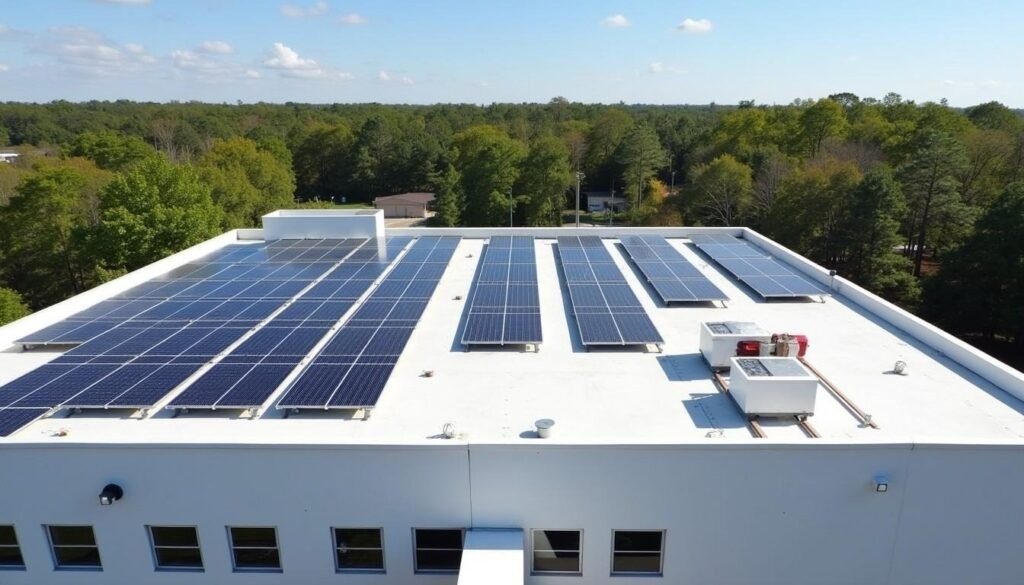
Solar Installations: Flat roofs provide ideal platforms for photovoltaic arrays, but solar installations must be coordinated during roof design. Penetrating roof-mounted systems require careful flashing details and potential local reinforcement. Ballasted systems avoid penetrations but add significant dead load requiring structural accommodation. Reserve areas for future solar installation even if not included in initial construction – structural capacity and conduit paths incorporated during construction cost far less than retrofit accommodations.
North Carolina Code Compliance and Regional Considerations
Building code requirements and regional construction practices affect commercial roofing design throughout North Carolina.
Wind Uplift Requirements: Coastal areas face the most stringent wind requirements, but even Piedmont locations like Raleigh require attention to wind resistance. Specify roofing systems tested to meet FM Global or UL wind uplift ratings appropriate for project location, building height, and exposure. Pay particular attention to perimeter and corner zones where uplift forces concentrate.
Fire Rating: Most commercial buildings require Class A fire-rated roofing assemblies. Verify that the complete assembly (deck, insulation, membrane) achieves required ratings, not just individual components. Some insulation materials require thermal barriers or specific membrane types to achieve Class A ratings.
Energy Code Compliance: North Carolina has adopted modified versions of the International Energy Conservation Code with specific requirements for roof assemblies. Document compliance through either prescriptive requirements or performance path analysis. Cool roofing credits may allow reduced insulation R-values in some cases.
Hurricane-Prone Region Requirements: Coastal counties and some inland areas are designated as hurricane-prone regions with enhanced requirements for wind resistance and water infiltration resistance. Verify project location classification and ensure specifications address applicable requirements.
Maintenance Access and Lifecycle Considerations
Design decisions made during initial construction significantly impact maintenance requirements and costs throughout the building’s life.
Access Provisions: Specify roof access that facilitates regular maintenance without creating safety hazards. Interior access through mechanical rooms provides weather-protected entry but requires adequate stair width and door sizing for equipment replacement. Exterior ship’s ladders represent economical solutions for small buildings but limit access during adverse weather.
Walkway Systems: Areas with regular foot traffic (paths to equipment, frequent inspection routes) benefit from designated walkway systems that protect the membrane from wear and provide slip-resistant surfaces. Specify walkway materials compatible with the roofing membrane and secured to prevent displacement during high winds.
Lightning Protection: Buildings with rooftop equipment or locations in areas with frequent thunderstorm activity should incorporate lightning protection systems designed and installed according to NFPA 780. Coordinate lightning protection conductor paths with roofing system design to avoid creating penetration points or drainage obstructions.
Future Roof Replacement: Consider that the roof will eventually require replacement, likely while the building remains occupied. Design equipment curbs, penetrations, and details that facilitate future reroofing without requiring extensive mechanical system modifications. Avoid creating situations where roofing contractors cannot access areas without removing permanently-installed equipment.
Working with Roofing Contractors: Design-Phase Collaboration
Engaging roofing expertise during design – rather than waiting until construction – improves both design quality and constructability.
Early Contractor Input: For projects using design-assist or integrated project delivery methods, involve roofing contractors during design development to review details, identify potential construction challenges, and suggest value engineering opportunities. Experienced contractors often identify detail improvements or material alternatives that enhance performance while controlling costs.
Specification Development: Develop roofing specifications that clearly communicate performance requirements while allowing appropriate contractor means and methods flexibility. Overly prescriptive specifications may limit competition or prevent contractors from using improved techniques. However, critical performance criteria (wind uplift ratings, warranty requirements, etc.) should be explicitly specified.
Coordination Requirements: Specify coordination meetings during construction that bring together roofing contractors, structural and mechanical trades, and testing agencies to review sequencing, detail transitions, and quality control procedures. Many roofing problems originate from inadequate coordination between trades during construction.
The Value of Specialized Roofing Expertise
While architects maintain overall design responsibility, complex commercial roofing projects benefit from specialized consultation during design development. The Flat Roof Specialists, winner of the Best Commercial Roofing Services Award, advises clients during the design phase—separate from construction bidding to avoid conflicts of interest. Their team reviews details, identifies potential issues, and suggests improvements based on years of experience with North Carolina’s unique climate challenges.
The Flat Roof Specialists have served Raleigh and North Carolina architects for over two decades, providing design-phase consultation that helps ensure roofing systems perform as intended. Their experience with all major roofing systems in North Carolina’s specific climate conditions offers valuable perspective during design development. Whether reviewing details, suggesting material alternatives, or identifying potential construction challenges, their input helps architects develop roofing designs that balance performance, constructability, and lifecycle value.
Conclusion: Designing for Long-Term Performance
Commercial flat roof design in North Carolina requires careful consideration of climate challenges, material selection, drainage design, structural coordination, and maintenance accessibility. While these systems may appear simple compared to other building elements, the details matter enormously. A well-designed roof provides decades of reliable service with minimal maintenance. A poorly designed system creates ongoing problems, emergency repairs, and premature replacement needs regardless of construction quality.
Architects who invest time understanding roofing system performance, incorporate appropriate details, specify quality materials, and coordinate with experienced roofing professionals during design create lasting value for building owners while avoiding the liability and reputation issues that accompany premature roofing failures.
North Carolina’s climate presents challenges, but proper design addresses these challenges systematically, creating commercial buildings with roofing systems that protect occupants and contents while requiring minimal intervention throughout their service lives.
The Flat Roof Specialists provide design consultation services for architects developing commercial projects throughout North Carolina. Their team’s extensive experience with flat roofing systems in the Carolina climate helps architects navigate material selection, detail development, and specification preparation. For more information about design-phase roofing consultation or to discuss specific project requirements, contact their experienced team.
The Flat Roof Specialists
9400-1 Ransdell Rd,
Raleigh, NC 27603
(919) 834-7663
https://www.theflatroofspecialists.com/